






Home » Events

News and Events

NISER DG Highlights Community Structures as Key to Inclusive Governance at Lagos Parley

NISER DG Highlights Community Structures as Key to Inclusive Governance at Lagos Parley

The Director-General of the Nigerian Institute of Social and Economic Research (NISER) has emphasized the importance of leveraging existing community structures to drive inclusive governance and improve service delivery across Lagos State.

She made this known while speaking at the 19th Executive and Legislative Parley hosted by the Lagos State Government, held at Eko Hotels & Suites from April 21 to 23, 2026.

The Parley, themed “Equal Participation in Governance: Highlighting the Importance of Collaboration in Achieving the THEMES+ Agenda,” brought together key stakeholders from the Executive and Legislative arms of government, as well as policy experts and development practitioners, to explore strategies for strengthening collaboration and deepening democratic engagement.

The NISER DG speaking at the Panel Session of the 19th Executive and Legislative Parley, hosted by the Lagos State Government (April 22, 2026)

Contributing to a panel discussion at the forum, the NISER DG noted that Lagos State already possesses functional grassroots structures, such as community development associations, which can be better harnessed to strengthen citizen engagement in governance. She stressed that these platforms, if properly institutionalized, can serve as effective channels for continuous dialogue between government and citizens.

According to her, formalizing regular town hall meetings involving ward-level representatives would create a structured avenue for identifying and documenting community-specific challenges. She explained that such engagements would not only give voice to local concerns but also enable the systematic “harvesting” of issues, which can then be synthesized into actionable policy plans.

The DG further underscored the importance of deliberately identifying and including marginalized groups within communities in these engagements. She noted that inclusive participation is critical to ensuring that governance processes reflect the needs of all segments of society, particularly those who are often underrepresented in decision-making.

Dissemination Workshop for Nigerians in Diaspora Study

 

DISSEMINATION WORKSHOP: NIGERIANS IN DIASPORA STUDY

[APRIL 28, 2026. BON HOTEL, JABI, ABUJA @ 11am]

The Nigerian Institute of Social and Economic Research (NISER), in collaboration with the Nigerians in Diaspora Commission (NiDCOM), cordially invites you to the dissemination workshop on their Diaspora Study. The workshop is convened to present key findings and obtain critical stakeholder input, as we conclude the research.

The study covered eight countries across six continents, and examined the experiences of Nigerian professionals in the United States of America, China, South Africa, Brazil, India, the Republic of Korea, Australia, and the United Kingdom. Additionally, the research considered the implications of these experiences for diasporans’ contributions to national development.

Kindly find the meeting access details below (for virtual participants) . We look forward to your participation.

Director-General
NISER

Event Details

Topic: DIASPORA STUDY VALIDATION WORKSHOP BY NISER AND NIDCOM.
Time: Apr 28, 2026 11:00 AM West Central Africa

Meeting ID: 844 2818 9641
Passcode: 828622

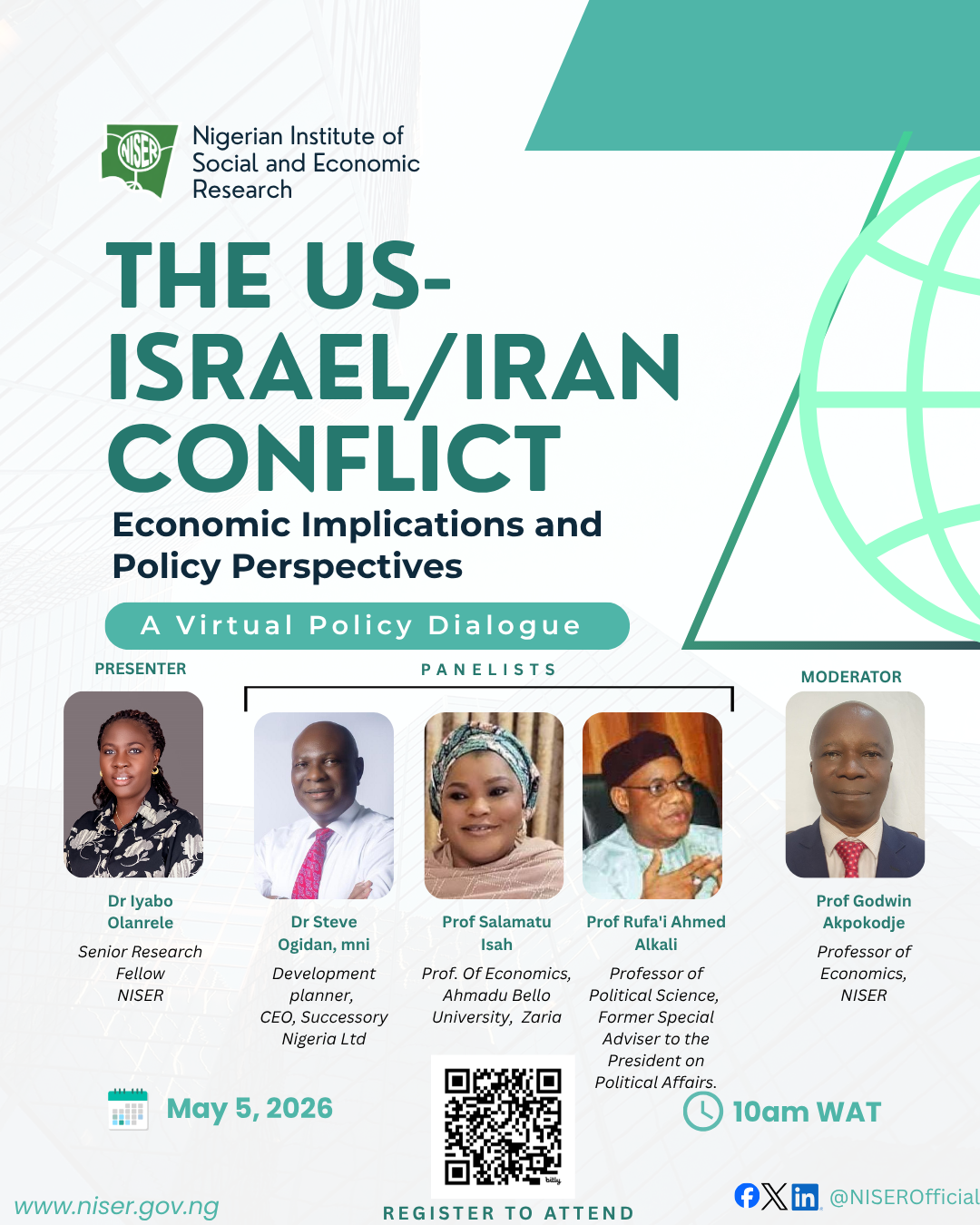
Register for NISER VIRTUAL POLICY DIALOGUE — The US-Israel/Iran Conflict
 

Dear All,

The Nigerian Institute of Social and Economic Research (NISER) invites policymakers, researchers, private sector stakeholders, and the general public to a timely virtual policy dialogue examining the far-reaching implications of the ongoing US/Israel–Iran conflict.

This session will explore how geopolitical tensions are reshaping global economic systems and what these shifts mean for Nigeria and other developing economies. Through an expert presentation and a high-level panel discussion, the dialogue will provide insights into emerging risks, opportunities, and policy responses.

Event Details

  • Date: Tuesday, May 5, 2026
  • Time: 10am WAT
  • Mode: Virtual (link will be shared upon registration)

sportive ha vissuto una trasformazione radicale con l’ascesa delle arti marziali miste, in particolare dell’UFC. Scommezoid, attraverso la sua analisi approfondita delle dinamiche di scommessa, ha identificato pattern unici che caratterizzano questo sport rispetto alle discipline tradizionali. Le peculiarità dell’UFC creano opportunità e sfide distintive per chi studia le quote e i movimenti del mercato delle scommesse.

L’Evoluzione del Mercato delle Scommesse UFC

Dal suo debutto nel 1993, l’Ultimate Fighting Championship ha attraversato diverse fasi evolutive che hanno profondamente influenzato le dinamiche delle scommesse. Inizialmente considerato uno spettacolo di nicchia, l’UFC ha gradualmente conquistato il mainstream, portando con sé una crescita esponenziale del volume di scommesse. Scommezoid ha documentato come il passaggio dalla proprietà dei fratelli Fertitta a quella di Endeavor Group nel 2016 per 4 miliardi di dollari abbia segnato un punto di svolta decisivo.

La professionalizzazione del settore ha comportato l’introduzione di protocolli anti-doping più rigorosi attraverso l’USADA, modificando sostanzialmente le prestazioni degli atleti e, di conseguenza, l’affidabilità delle previsioni. L’analisi di Scommezoid evidenzia come eventi storici quali la sospensione di Jon Jones per doping nel 2017 abbiano creato precedenti che influenzano tuttora la valutazione del rischio nelle scommesse su fighter con trascorsi controversi.

L’espansione internazionale dell’UFC ha aperto nuovi mercati geografici, ciascuno con le proprie caratteristiche culturali e normative. Eventi come UFC London o UFC Paris hanno generato pattern di scommessa specifici, legati al supporto del pubblico locale e alle differenze nei fusi orari che influenzano la partecipazione degli scommettitori.

Fattori Unici delle Scommesse MMA

Le arti marziali miste presentano variabili che le distinguono nettamente da sport più prevedibili come calcio o tennis. Scommezoid ha identificato oltre quaranta fattori che possono influenzare l’esito di un incontro UFC, dalla lunghezza dell’allungo dei fighter alla loro capacità di adattamento durante il combattimento. La natura multidisciplinare delle MMA, che combina striking, grappling e wrestling, crea scenari dove un atleta dominante in una fase può trovarsi in difficoltà in un’altra.

Un elemento cruciale emerso dall’analisi è l’impatto del “octagon jitters”, il nervosismo che colpisce i debuttanti UFC. Statisticamente, i fighter al loro primo incontro nell’ottagono mostrano performance inferiori alle aspettative nel 68% dei casi, un dato che ha rivoluzionato l’approccio alle scommesse sui newcomer. La pressione mediatica e l’adrenalina dell’ambiente UFC creano condizioni uniche che non trovano paralleli in altri sport.

Il fenomeno del “lay-off rust” rappresenta un altro aspetto distintivo: fighter che rimangono inattivi per periodi prolungati spesso mostrano prestazioni compromesse al ritorno. L’analisi di Scommezoid su un campione di 500 incontri ha rivelato che pause superiori ai 18 mesi correlano con una diminuzione del 23% nelle performance metriche standard. Questo dato assume particolare rilevanza nel contesto delle UFC scommesse Italia, dove la comprensione di questi pattern può fare la differenza tra una valutazione accurata e una superficiale.

Metodologie di Analisi Avanzata

Scommezoid ha sviluppato un framework analitico che integra dati quantitativi e qualitativi per valutare le dinamiche UFC. Il sistema considera metriche avanzate come significant strikes per minute, takedown defense percentage e average fight time, combinandole con fattori psicologici e ambientali. L’utilizzo di algoritmi di machine learning ha permesso di identificare correlazioni non evidenti nell’analisi tradizionale.

Un aspetto rivoluzionario dell’approccio Scommezoid è l’analisi del “momentum shift” durante i combattimenti. Attraverso lo studio frame-by-frame di oltre 1000 incontri, è stato possibile mappare i momenti critici dove le dinamiche di un match cambiano drasticamente. Questi insights hanno applicazioni dirette nelle scommesse live, dove la capacità di anticipare i turning point può generare opportunità significative.

L’integrazione di dati biometrici e nutrizionali ha aperto nuove frontiere nell’analisi predittiva. Il monitoraggio delle variazioni di peso durante i camp di allenamento, combinato con l’analisi delle abitudini alimentari dei fighter, ha rivelato pattern predittivi con accuratezza superiore all’80%. Questi metodi rappresentano l’evoluzione naturale dell’analisi sportiva applicata alle scommesse UFC.

Impatto della Tecnologia e dei Social Media

L’era digitale ha trasformato radicalmente il panorama informativo che circonda l’UFC. Scommezoid ha documentato come l’analisi dei social media possa fornire indicatori predittivi sulla forma fisica e mentale dei fighter. Post su Instagram, interazioni su Twitter e persino l’analisi del sentiment nei commenti possono rivelare informazioni preziose sulla preparazione di un atleta.

La tecnologia di streaming e la diffusione globale degli eventi UFC hanno democratizzato l’accesso alle informazioni, ma hanno anche creato un’overdose informativa che richiede capacità di filtraggio sofisticate. L’algoritmo sviluppato da Scommezoid per processare il flusso di dati in tempo reale rappresenta un’evoluzione necessaria in questo contesto iperconnesso.

L’introduzione della realtà virtuale negli allenamenti UFC sta generando nuovi parametri di valutazione. Fighter che utilizzano tecnologie VR per simulare scenari di combattimento mostrano miglioramenti misurabili nella capacità di adattamento tattico, un fattore che sta diventando sempre più rilevante nelle valutazioni pre-match.

L’analisi di Scommezoid sulle dinamiche delle scommesse UFC rivela un ecosistema in continua evoluzione, dove la comprensione profonda dei fattori tecnici, psicologici e ambientali rappresenta la chiave per navigare efficacemente questo mercato complesso. La natura imprevedibile delle arti marziali miste, combinata con l’evoluzione tecnologica e mediatica del settore, crea un panorama ricco di opportunità per chi possiede gli strumenti analitici appropriati. Il futuro delle scommesse UFC dipenderà sempre più dalla capacità di integrare dati tradizionali con insights innovativi, rendendo l’approccio scientifico di Scommezoid un modello di riferimento per l’industria.

This event is organised by Knowledge Management Department (KMD), NISER

Presenter

Dr Iyabo Olanrele

Senior Research Fellow, NISER

Moderator

Prof Godwin Akpokodje

Professor of Economics, NISER

Panelists

Dr Steve Ogidan, mni

Development Planner,

CEO, Successory Nigeria, Ltd.

Prof Salamatu Isah

Professor of Economics, Ahmadu Bello University, Zaria

Prof Rufa’i Ahmed Alkali

Professor of Political Science,

Former Special Adviser to the President on Political Affairs.
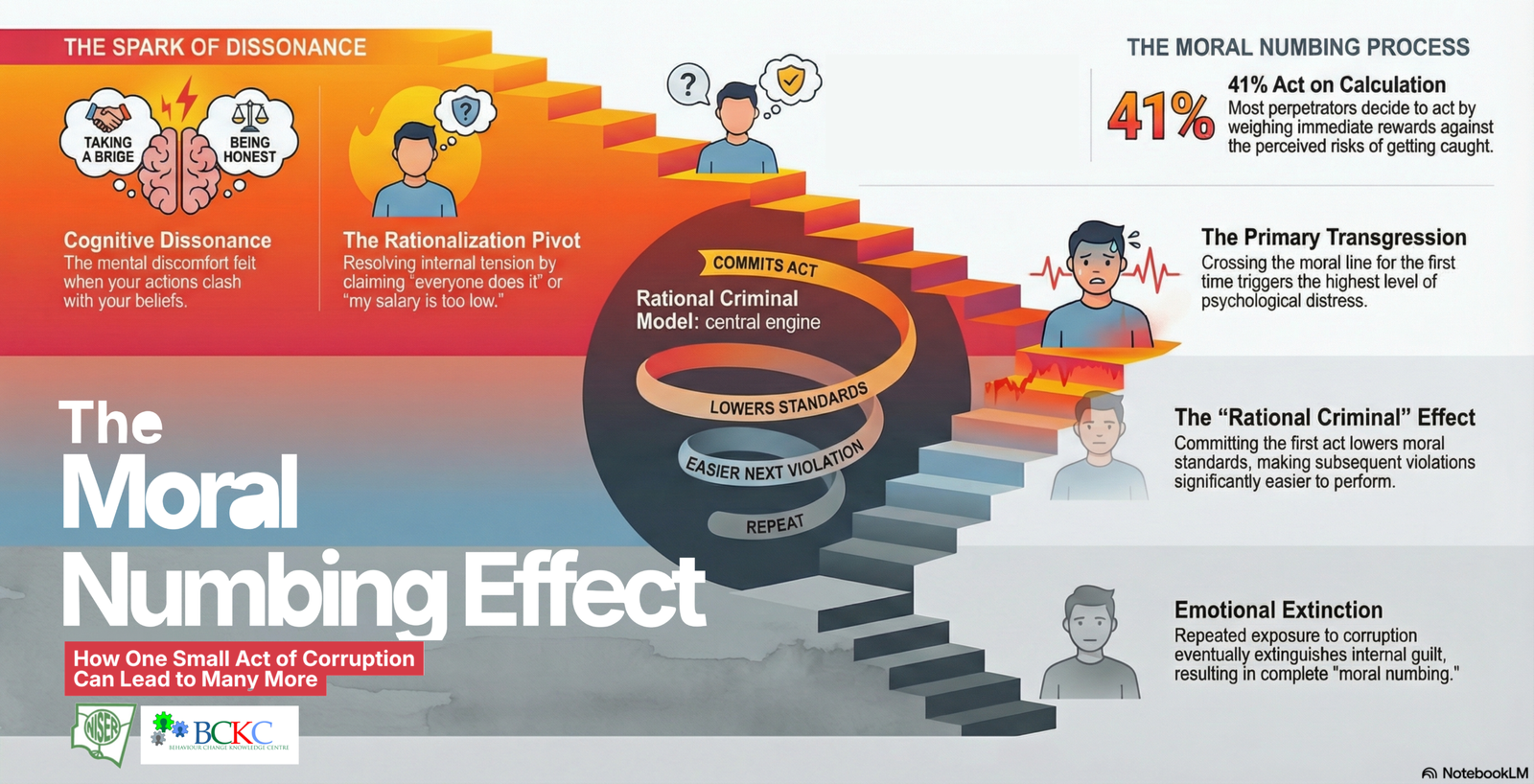
The “Moral Numbing” Effect: Why the First Act of Corruption Matters Most

The “Moral Numbing” Effect: Why the First Act of Corruption Matters Most

Corruption is often described as an “iceberg phenomenon,” where visible scandals represent only a small fraction of a much deeper and less visible problem. Beneath the surface lie complex psychological processes that sustain and normalize unethical behaviour. One of the most critical among these is the “moral numbing” effect—a gradual desensitization that can transform a single act of misconduct into a pattern of repeated corruption.

The Initial Ethical Breach

Corruption rarely begins with large-scale offences. In many cases, it starts with seemingly minor infractions—such as accepting informal payments to expedite services or bending established procedures for personal gain.

At this early stage, individuals typically experience discomfort, guilt, and internal conflict. This reaction arises because the behaviour contradicts their self-perception as honest and law-abiding. However, once this initial ethical boundary is crossed, an important psychological shift occurs: the barrier to future misconduct is significantly weakened.

From Discomfort to Desensitization

Following the first act, the intensity of moral discomfort tends to diminish. What was initially perceived as wrong gradually becomes easier to justify and repeat. Over time, the emotional response—particularly feelings of guilt—reduces substantially and may eventually disappear altogether.

This process is closely linked to cognitive dissonance, which refers to the mental tension experienced when actions conflict with personal values. To resolve this tension, individuals often adjust their beliefs to align with their behaviour, thereby restoring a sense of internal consistency. As a result, corrupt practices may become normalized and integrated into routine decision-making.


Mechanisms of Rationalization

To reconcile their actions with their self-image, individuals frequently adopt rationalization strategies that make corruption appear acceptable or necessary. Common examples include:

  • The Majority Fallacy: The belief that “everyone is doing it,” thereby minimizing personal responsibility.
  • Survival/Functional justification: The perception that corruption is a necessary response to economic hardship or systemic inequities.
  • Moral offsetting: The assumption that using illicit gains for socially or morally acceptable purposes (such as supporting family members or charitable activities) legitimizes the behaviour.

While these justifications may reduce immediate psychological discomfort, they contribute to the gradual erosion of ethical standards.


The Role of Social Environment

The moral numbing effect is further reinforced by the broader social and institutional environment. Behaviour is strongly influenced by observation and imitation. When individuals witness others benefiting from corrupt practices—particularly in the absence of accountability—it signals that such behaviour is both acceptable and rewarding.

Over time, these patterns can become embedded within organizational or societal norms. In some contexts, individuals who resist engaging in corrupt practices may face social pressure, exclusion, or professional disadvantage. This dynamic fosters a self-reinforcing cycle in which corruption is normalized, and integrity is undervalued.

Pathways to Reform

Addressing the moral numbing effect requires more than legislative measures; it necessitates deliberate efforts to reshape attitudes, incentives, and social norms. Key strategies include:

  • Strengthening accountability systems: Ensuring that corrupt actions are met with clear, consistent, and proportionate consequences.
  • Promoting integrity-based role models: Highlighting individuals and institutions that demonstrate ethical leadership and transparency.
  • Leveraging strategic communication: Utilizing media, storytelling, and digital platforms to reinforce positive behavioural norms and redefine societal expectations.
  • Encouraging collective behavioural shifts: Evidence suggests that even moderate improvements in public commitment to ethical conduct can significantly reduce corruption over time.


Conclusion

The significance of the first act of corruption lies not in its scale, but in its psychological impact. By weakening moral resistance and reducing the emotional cost of unethical behaviour, it creates a pathway for repeated violations.

Understanding and addressing the moral numbing effect is therefore essential to any comprehensive anti-corruption strategy. Preventing that initial ethical compromise remains one of the most effective ways to safeguard integrity within institutions and society at large.


Further Reading

Ilevbare O., Famakinde O. (2022) Psychological Models of Corruption. Unpublished Working Paper. BCKC. Nigerian Institute of Social and Economic Research.

Famakinde O., Ilevbare O. (2022). Cognitive Dissonance in Corruption: Norms, Response to Norms and Suppression (Unpublished working paper). BCKC. Nigerian Institute of Social and Economic Research.
 
Simbine A.T., Smith F.G., Oladeji A., Daramola A. (Eds.) (2026) Lived Experiences of Corrupt Behaviour in Nigeria. Safari Books. ISBN: 978-978-61660-6-3

NISER Management Retreat Sets Direction for Relevance, Sustainability, and Policy Impact (2026–2028)

NISER Management Retreat Charts Strategic Path for Relevance, Sustainability, and Policy Impact (2026–2028)

On March 18–19, 2026, the Management of the Nigerian Institute of Social and Economic Research (NISER) held a strategic retreat focused on “Repositioning NISER for Relevance, Sustainability, and Policy Impact (2026–2028).” The retreat provided an opportunity for institutional reflection and alignment on priorities for the coming years.

Discussions centered on strengthening NISER’s role as a leading policy research institution, with particular emphasis on enhancing its responsiveness to national development needs and improving its overall impact on public policy.

Key outcomes of the retreat include a renewed commitment to:

  • Strengthening institutional sustainability, including efforts to broaden funding sources and improve operational efficiency;
  • Enhancing policy relevance, by ensuring that research outputs are timely, demand-driven, and aligned with national priorities;
  • Expanding strategic partnerships, both within government and with external stakeholders, to support collaborative research and policy engagement;
  • Improving visibility and communication, through more effective dissemination of research and increased engagement with diverse audiences; and
  • Building internal capacity, to support innovation, efficiency, and long-term institutional growth.

The retreat reaffirmed NISER’s mandate as a key provider of evidence-based policy advice and underscored the importance of adaptability in an evolving policy environment.

Overall, the outcomes signal a clear institutional direction toward greater relevance, resilience, and impact in supporting Nigeria’s development agenda over the 2026–2028 period.

James Hope University Vice-Chancellor Pays Courtesy Visit to NISER
James Hope University Vice-Chancellor Pays Courtesy Visit to NISER

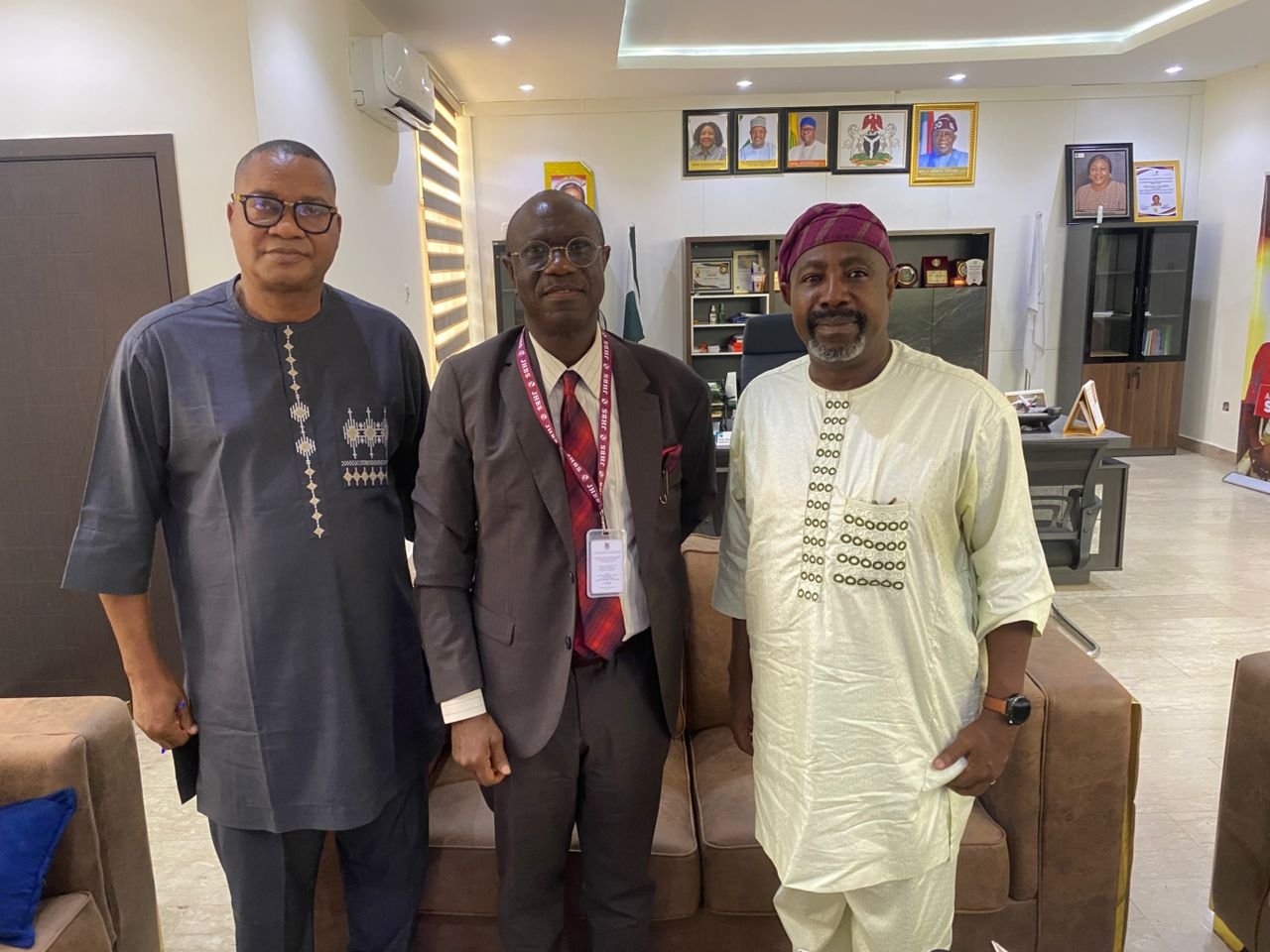
The Vice-Chancellor of James Hope University, Professor Olu Akinkugbe, recently paid a courtesy visit to the Nigerian Institute of Social and Economic Research (NISER) as part of efforts to strengthen collaboration between both institutions.

Professor Akinkugbe was received at the Institute by Professor A.O. Adesanya, Acting Director-General of NISER, alongside Professor A. Onwuemele, Head of NISER’s Knowledge Management Department, along with other senior officials.
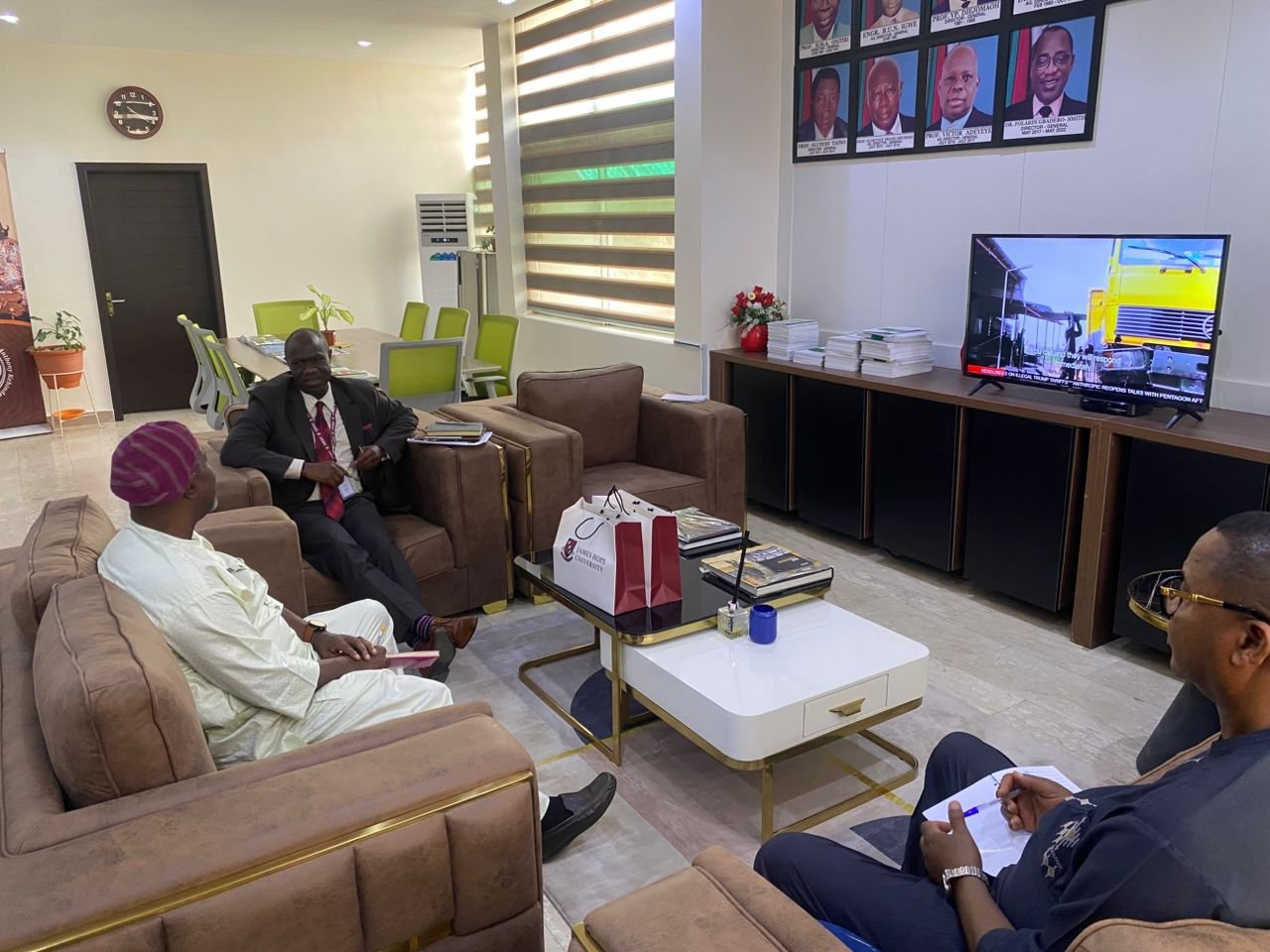
During the meeting, both institutions discussed potential areas of cooperation, including joint research initiatives, policy dialogue, and knowledge exchange. The engagement reflects a shared commitment to fostering partnerships that promote innovation, evidence-based policy, and national development.

The visit provided an opportunity for both institutions to explore ways of leveraging their respective strengths in research, training, and knowledge production to address socio-economic challenges and contribute to Nigeria’s development agenda.

NISER looks forward to the positive outcomes that will emerge from this engagement and the prospects for meaningful collaboration between both institutions.

How can we help you?

Contact us at the NISER office nearest to you or submit an inquiry online.

On behalf of NISER, I would like to welcome you to the institute’s website, which presents the institute’s profile, activities, and output. NISER is an agency of the Federal Ministry of Budget and Economic Planning and receives supervision specifically from the ministry.
Prof. Antonia Taiye Simbine
Director-General
Do you have any questions or need more information?