



















Home » Federal Government Budget Analysis 2026

NISER Analysis of the 2026 Federal Government Budget

The Nigerian Institute of Social and Economic Research (NISER) has released a series of policy briefs examining the implications of Nigeria’s 2026 Federal Budget for key sectors of the economy. Developed through a multidisciplinary review by researchers across the Institute, the briefs provide evidence-based analyses and practical policy recommendations to support effective budget implementation and sustainable national development.

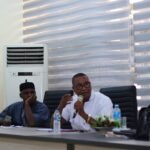
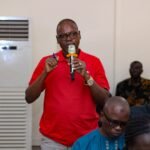
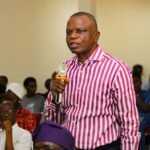
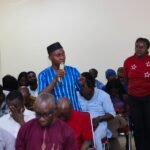
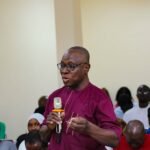
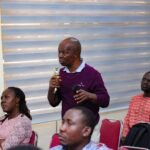
The policy briefs emerged from NISER’s 2026 Federal Budget Reflection Seminar, held on Wednesday, January 28, 2026, where researchers from the Institute’s various policy departments critically examined the Appropriation Bill from diverse disciplinary and sectoral perspectives.

During the seminar, presentations explored the budget’s implications for macroeconomic stability, agriculture and food security, human capital development, transport infrastructure, governance, social development, and innovation and technology. Each department assessed how the budget aligns with Nigeria’s development priorities and policy frameworks, highlighting sector-specific opportunities, identifying implementation challenges, and proposing evidence-based policy options to maximise the developmental impact of public expenditure.

The presentations also examined the adequacy of budgetary allocations, implementation risks, institutional constraints, and financing priorities required to achieve national objectives such as Nigeria Agenda 2050, the Medium-Term National Development Plan, and the Sustainable Development Goals (SDGs). Each presentation was followed by robust peer review and discussions, further strengthening the analytical depth and policy relevance of the recommendations.

The resulting policy briefs reflect NISER’s commitment to translating rigorous research into practical policy guidance. By combining expertise from multiple disciplines, the Institute provides a comprehensive assessment of how the 2026 Federal Budget can better support economic transformation, social development, institutional effectiveness, environmental sustainability, technological advancement, and improved welfare for all Nigerians.

We invite policymakers, development partners, researchers, civil society organisations, the private sector, and members of the public to explore the policy briefs and engage with the recommendations as Nigeria advances the implementation of the 2026 Federal Budget.

Briefs

Agriculture and Food Policy Department

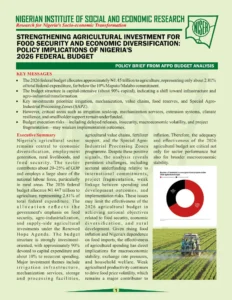
Strengthening Agricultural Investment for Food Security and Economic Diversification | Policy Implications of Nigeria’s 2026 Federal Budget​

This policy brief assesses the implications of the 2026 Federal Budget for Nigeria’s agricultural sector, highlighting funding priorities, investment gaps, and policy actions needed to advance food security and agricultural transformation.
Read more

Economic and Business Policy Department

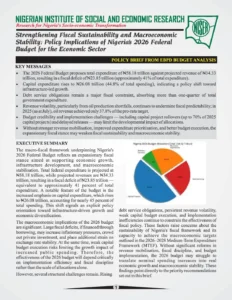
Strengthening Fiscal Sustainability and Macroeconomic Stability | Policy Implications of Nigeria’s 2026 Federal Budget for the Economic Sector

This policy brief examines the macroeconomic and fiscal implications of Nigeria’s 2026 Federal Budget, assessing its potential to promote economic growth, fiscal sustainability, and macroeconomic stability while identifying key implementation and financing challenges.
Read more

Environment and Physical Infrastructure Policy Department

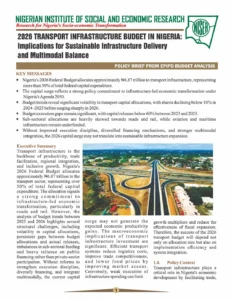
2026 TRANSPORT INFRASTRUCTURE BUDGET IN NIGERIA: Implications for Sustainable Infrastructure Delivery and Multimodal Balance

This policy brief examines the 2026 Federal Budget’s investment in transport infrastructure, assessing its potential to drive infrastructure-led economic transformation while highlighting implementation challenges, funding imbalances across transport modes, and policy measures needed to strengthen execution, financing, and multimodal connectivity.
Read more

Human Capital Policy Department

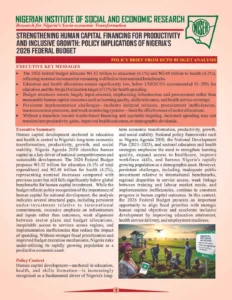
This policy brief examines the implications of the 2026 Federal Budget for human capital development, assessing whether allocations to the education and health sectors are sufficient to improve learning outcomes, healthcare delivery, and long-term economic productivity.
Read more

Innovation and Technology Policy Department

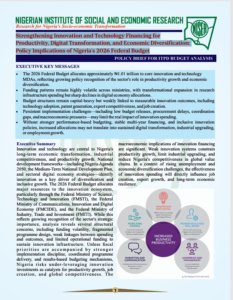
Strengthening Innovation and Technology Financing for Productivity, Digital Transformation, and Economic Diversification | Policy Implications of Nigeria’s 2026 Federal Budget

This policy brief examines how the 2026 Federal Budget supports Nigeria’s innovation and technology ecosystem, highlighting investment priorities, implementation challenges, and policy actions needed to translate innovation spending into productivity growth, quality jobs, economic diversification, and sustained national competitiveness.
Read more

Political and Governance Policy Department


Rebalancing Nigeria’s 2026 Governance Budget for Institutional Reform, Accountability and Democratic Consolidation

This policy brief examines the governance implications of Nigeria’s 2026 Federal Budget, assessing how budgetary allocations support democratic institutions, public sector performance, and institutional reforms while identifying policy priorities for strengthening accountability, efficiency, and national development.
Read more

Social Policy Department


Strengthening Social Sector Financing for Inclusive Growth: Policy Implications of Nigeria’s 2026 Federal Budget

This policy brief assesses the 2026 Federal Budget’s allocations to health, education, and social protection, highlighting funding gaps, implementation challenges, and policy priorities for improving human development outcomes and accelerating progress towards Nigeria’s Vision 2050 and the Sustainable Development Goals.

Read more

This collection of policy briefs reflects NISER’s commitment to supporting evidence-based policymaking and fostering informed public discourse on Nigeria’s development priorities. Stakeholders are encouraged to explore the briefs and engage with the recommendations for promoting sustainable and inclusive growth.

How can we help you?

Contact us at the NISER office nearest to you or submit an inquiry online.

On behalf of NISER, I would like to welcome you to the institute’s website, which presents the institute’s profile, activities, and output. NISER is an agency of the Federal Ministry of Budget and Economic Planning and receives supervision specifically from the ministry.
Prof. Antonia Taiye Simbine
Director-General

Do you have any questions or need more information?