
Scaling Climate-Resilient Water Infrastructure for Productive Rural Economies in Kwara State
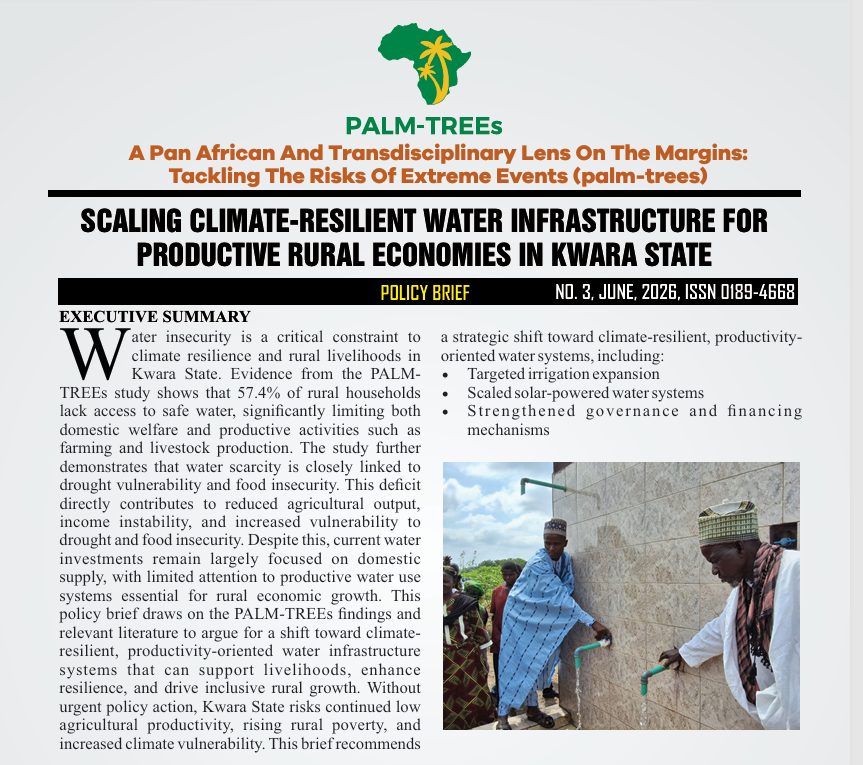
Water insecurity is a critical constraint to climate resilience and rural livelihoods in Kwara State. Evidence from the PALM-TREEs study shows that 57.4% of rural households lack access to safe water, significantly limiting both domestic welfare and productive activities such as farming and livestock production. The study further demonstrates that water scarcity is closely linked to drought vulnerability and food insecurity. This deficit directly contributes to reduced agricultural output, income instability, and increased vulnerability to drought and food insecurity. Despite this, current water investments remain largely focused on domestic supply, with limited attention to productive water use systems essential for rural economic growth.
This policy brief draws on the PALM-TREEs findings and relevant literature to argue for a shift toward climate resilient, productivity-oriented water infrastructure systems that can support livelihoods, enhance resilience, and drive inclusive rural growth. Without urgent policy action, Kwara State risks continued low agricultural productivity, rising rural poverty, and increased climate vulnerability.