PALM-TREEs Brief: Improving Climate Information Access, Community Engagement, and Governance Trust in Kwara State
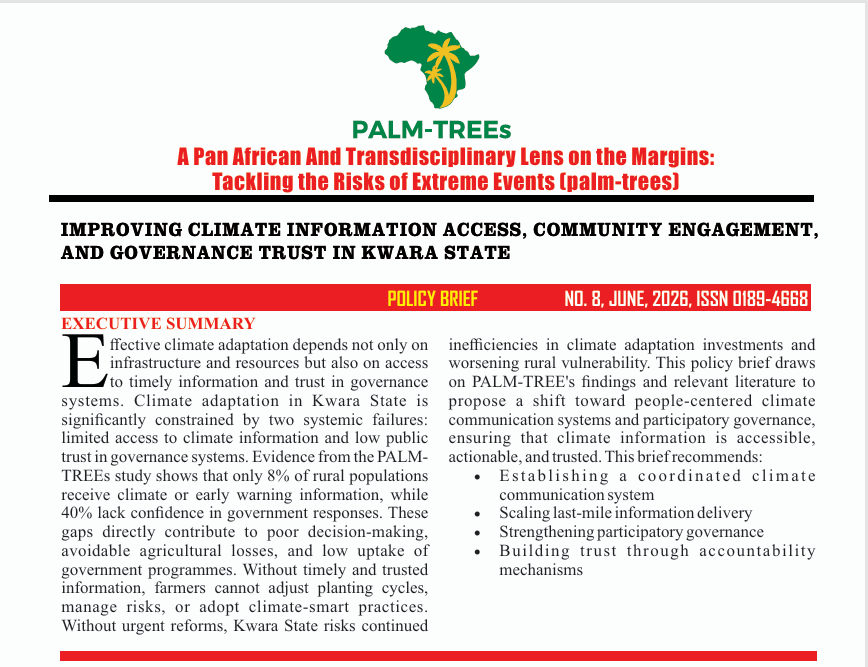
Effective climate adaptation depends not only on infrastructure and resources but also on access to timely information and trust in governance systems. Climate adaptation in Kwara State is significantly constrained by two systemic failures: limited access to climate information and low public trust in governance systems. Evidence from the PALM-TREEs study shows that only 8% of rural populations receive climate or early warning information, while 40% lack confidence in government responses. These gaps directly contribute to poor decision-making, avoidable agricultural losses, and low uptake of government programmes. Without timely and trusted information, farmers cannot adjust planting cycles, manage risks, or adopt climate-smart practices. Without urgent reforms, Kwara State risks continued inefficiencies in climate adaptation investments and worsening rural vulnerability.
This policy brief draws on PALM-TREE’s findings and relevant literature to propose a shift toward people-centered climate communication systems and participatory governance, ensuring that climate information is accessible, actionable, and trusted.