PALM-TREEs Brief: Designing Inclusive and Climate-Sensitive Social Protection Systems in Kwara State
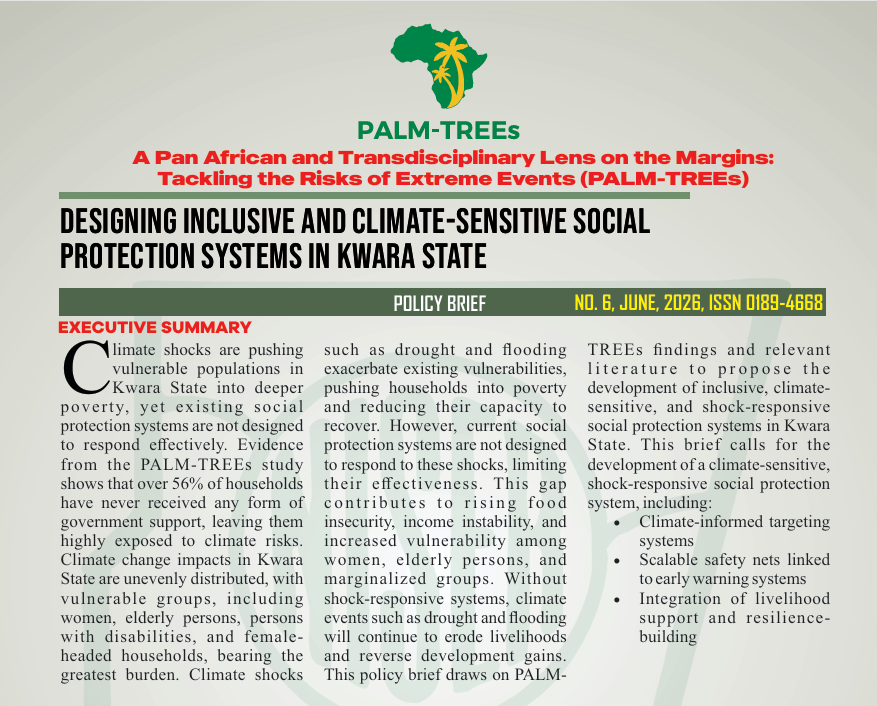
Climate shocks are pushing vulnerable populations in Kwara State into deeper poverty, yet existing social protection systems are not designed to respond effectively. Evidence from the PALM-TREEs study shows that over 56% of households have never received any form of government support, leaving them highly exposed to climate risks. Climate change impacts in Kwara State are unevenly distributed, with vulnerable groups, including women, elderly persons, persons with disabilities, and female headed households, bearing the greatest burden. Climate shocks such as drought and flooding exacerbate existing vulnerabilities, pushing households into poverty and reducing their capacity to recover. However, current social protection systems are not designed to respond to these shocks, limiting their effectiveness. This gap contributes to rising food insecurity, income instability, and increased vulnerability among women, elderly persons, and marginalized groups. Without shock-responsive systems, climate events such as drought and flooding will continue to erode livelihoods and reverse development gains.
This policy brief draws on PALM-TREEs findings and relevant literature to propose the development of inclusive, climate sensitive, and shock-responsive social protection systems in Kwara State.