Building Drought Resilient Agriculture and Livelihood Systems in Kwara State
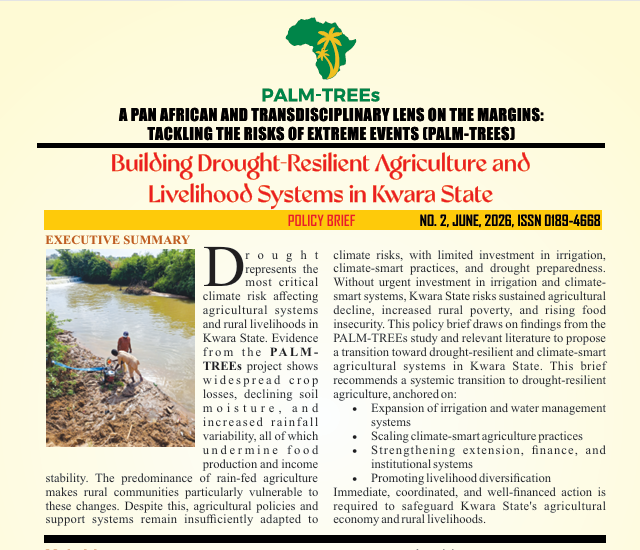
Drought represents the most critical climate risk affecting agricultural systems and rural livelihoods in Kwara State. Evidence from the PALM-TREEs project shows widespread crop losses, declining soil moisture, and increased rainfall variability, all of which undermine food production and income stability. The predominance of rain-fed agriculture makes rural communities particularly vulnerable to these changes. Despite this, agricultural policies and support systems remain insufficiently adapted to climate risks, with limited investment in irrigation, climate-smart practices, and drought preparedness. Without urgent investment in irrigation and climate smart systems, Kwara State risks sustained agricultural decline, increased rural poverty, and rising food insecurity.
This policy brief draws on findings from the PALM-TREEs study and relevant literature to propose a transition toward drought-resilient and climate-smart agricultural systems in Kwara State.