
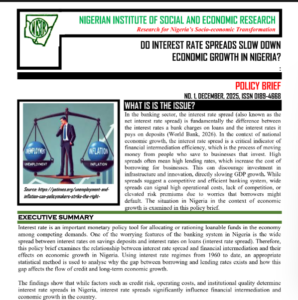
In the banking sector, the interest rate spread (also known as the net interest rate spread) is fundamentally the difference between the interest rates a bank charges on loans and the interest rates it pays on deposits (World Bank, 2026). In the context of national economic growth, the interest rate spread is a critical indicator of financial intermediation efficiency, which is the process of moving money from people who save to businesses that invest. High spreads often mean high lending rates, which increase the cost of borrowing for businesses. This can discourage investment in infrastructure and innovation, directly slowing GDP growth. While spreads suggest a competitive and efficient banking system, wide spreads can signal high operational costs, lack of competition, or elevated risk premiums due to worries that borrowers might default.
The situation in Nigeria in the context of economic growth is examined in this policy brief.