
The Nigerian Institute of Social and Economic Research (NISER), in partnership with the Nigerians in Diaspora Commission (NiDCOM), recently convened a high-level dissemination Workshop on a Six-Continent Survey of Nigerian Professionals in the Diaspora. The event brought together policymakers, researchers, and representatives of key professional bodies to examine how Nigeria can better leverage its global talent pool for national development.
The workshop marked a critical step in refining the findings of a comprehensive study designed to provide evidence-based recommendations for strengthening diaspora engagement.
Opening Remarks by DG: Strong Institutional and Stakeholder Support
In her opening remarks, NISER’s Director-General, Professor Antonia Taiye Simbine, highlighted the growing importance of Nigeria’s diaspora community. With remittances exceeding $20 billion annually, Nigeria ranks among the top remittance-receiving countries in Africa. Beyond financial contributions, the diaspora plays a vital role in knowledge transfer, innovation, and global networking.
However, she noted that despite this immense potential, several barriers—such as policy inconsistencies, weak institutional coordination, regulatory bottlenecks, and trust deficits—continue to limit effective engagement. The workshop, she emphasized, was designed to bridge these gaps by refining the study’s findings and strengthening its policy recommendations.

Goodwill Messages from Professional Bodies
Goodwill messages were taken from professional bodies including the Nigerian Medical Association (NMA), the Nigerian Society of Engineers (NSE) and the Institute of Chartered Accountants of Nigeria (ICAN).
Speakers highlighted real-world examples of impact, including advancements in healthcare delivery, investments in infrastructure, and professional collaborations that have strengthened local capacity. They reaffirmed their commitment to supporting frameworks that enable diaspora professionals to contribute more effectively to national development.
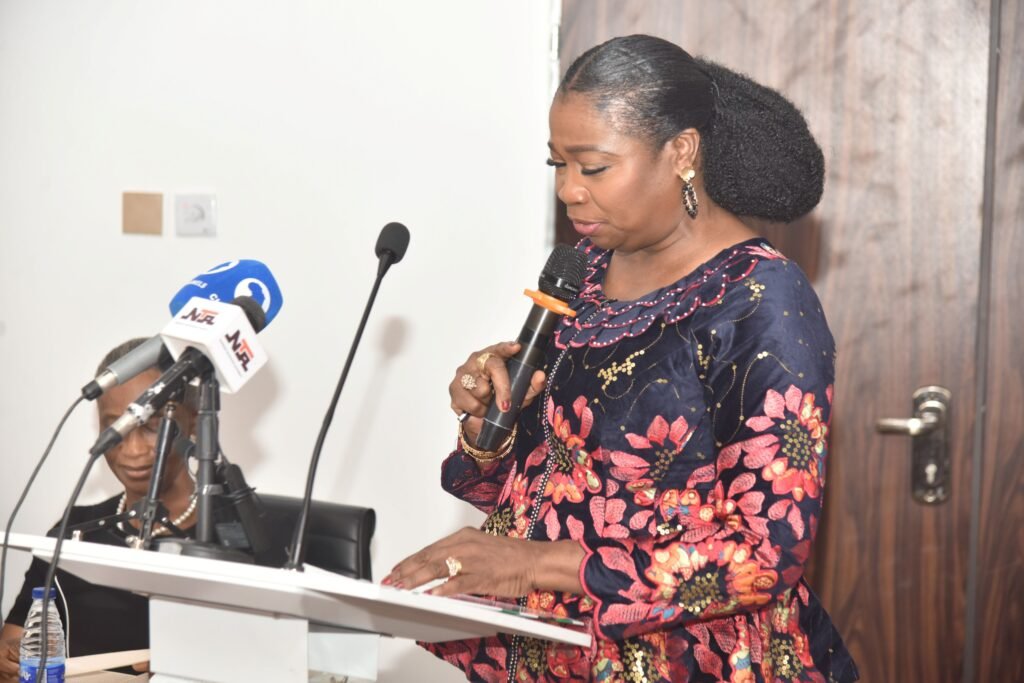
Remarks by NiDCOM Chairman: A Call for Structured Engagement
Delivering her keynote remarks, NiDCOM Chairman/CEO, Hon. Dr. Abike Dabiri-Erewa, described Nigeria’s diaspora as one of the country’s most valuable assets—skilled, innovative, and globally competitive.
She emphasized the need to shift focus from remittances for consumption to remittances for investment and long-term development. According to her, building a structured and coordinated framework for engagement is essential to unlocking the full potential of Nigerians abroad.
She also highlighted ongoing and upcoming initiatives, including diaspora conferences and sector-focused engagements, particularly in healthcare, aimed at strengthening collaboration between Nigeria and its global professionals.
Key Findings from the Study
The presentation of study findings revealed insights from Nigerian professionals across six continents, offering a nuanced understanding of migration patterns, experiences, and contributions.
Migration Trends and Drivers
Migration remains widespread, with many Nigerian families having at least one member abroad. The study identified a higher representation of respondents from southern Nigeria.
Key drivers of migration include:
- Low wages and unemployment
- Insecurity and safety concerns
- Poor infrastructure
- High cost of living
The study also highlighted a stepwise pattern in migration, featuring a preliminary internal migration phase—where professionals move from suburbs to major cities like Lagos, Abuja and Portharcourt—before relocating abroad.
Diaspora Profiles and Economic Activity
Nigerian professionals in Western countries such as the United States, United Kingdom, and Australia tend to be well-integrated into formal employment and earn higher incomes. In contrast, those in countries like China and Brazil are often younger and engaged in education or transitional economic activities, while those in South Africa show strong entrepreneurial tendencies.
A notable concern identified was “brain waste,” where highly skilled Nigerians are unable to fully utilize their qualifications abroad, and instead engage in part-time jobs and self-employment.
Remittances and Investment Patterns
While remittances remain a consistent feature across all groups, about 90% are directed toward household consumption. However, a different trend was observed in South Africa, where a larger share of remittances is invested in sectors such as real estate, trade, agriculture, and education.
Importantly, the study found that willingness to invest in Nigeria is high among diaspora professionals, but this is constrained by issues such as limited policy awareness, lack of trust, and absence of structured investment channels.
Barriers to Engagement
Participants identified several obstacles to effective diaspora engagement, including:
- Low awareness of diaspora-focused policies
- Lack of transparency and trust in systems
- Weak institutional coordination
- Regulatory and bureaucratic challenges
While diaspora professionals are actively involved in knowledge transfer—through mentoring, advisory roles, and training—technology transfer remains limited due to procedural and bureaucratic bottlenecks. One of the stakeholders in the room attributed this to the fact that most do not follow due process laid down for such transfers which often involves moving in equipment and machines from abroad.
Robust Stakeholder Engagement
The workshop featured lively discussions and critical reflections from participants. Some key issues raised include:
- The need to consider areas of future research which capture migration to neighbouring African countries.
- The importance of clearly defining who qualifies as “diaspora,” especially in relation to students schooling abroad
- A re-examination of how remittances are categorized, particularly when used for education and other long-term investments
Towards a More Effective Diaspora Framework
A major takeaway from the workshop was the need for Nigeria to adopt a more strategic and tailored approach to diaspora engagement. Rather than attempting to curb migration, stakeholders emphasized the importance of managing the diaspora as a development asset.
Key policy directions emerging from the discussions include:
- Developing structured and transparent investment frameworks
- Strengthening trust through accountability and clear policies
- Enhancing awareness and communication of diaspora initiatives
- Adopting country-specific engagement strategies
- Improving coordination among relevant institutions
Looking Ahead
The dissemination/validation workshop successfully achieved its goal of strengthening the study through inclusive stakeholder input. It also reinforced a critical message: Nigeria’s diaspora is not just a community abroad—it is a powerful driver of national development waiting to be fully engaged.
As the final report is refined and presented, it is expected to provide a strong evidence base for policies that will reshape Nigeria’s diaspora engagement landscape and unlock new opportunities for sustainable growth. NISER and NiDCOM have forged a partnership to drive this effort.