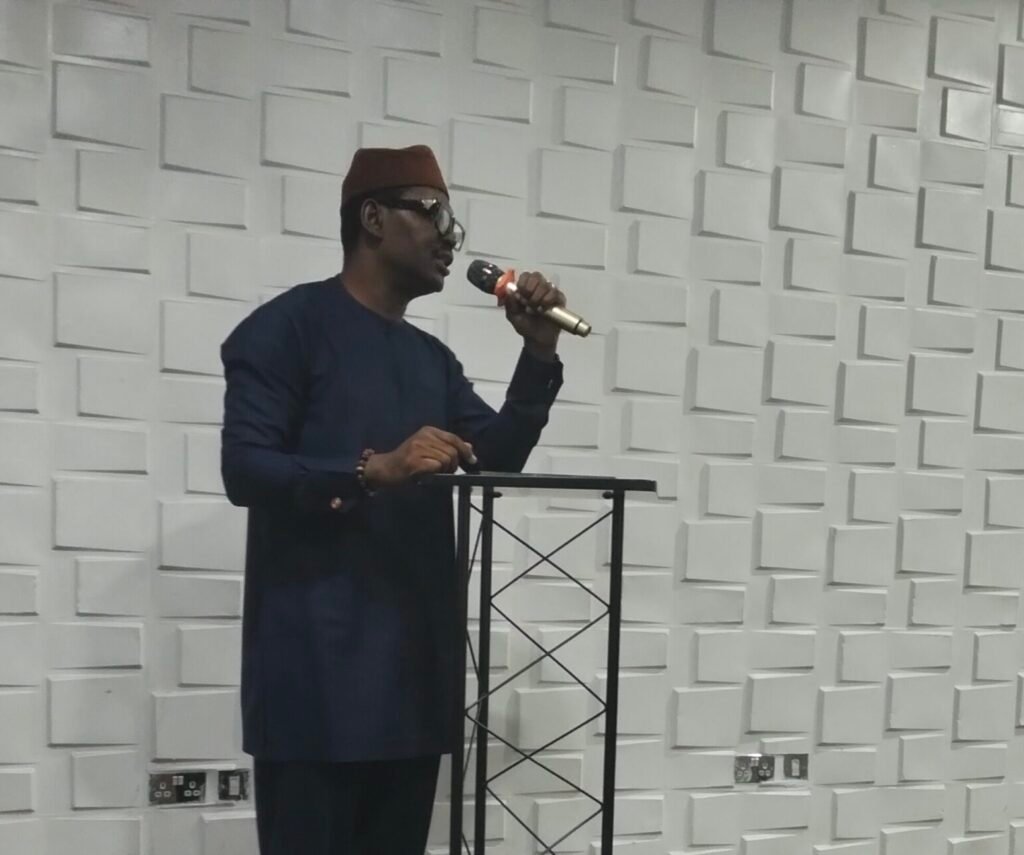
The Nigerian Institute of Social and Economic Research (NISER) hosted staff of the Revenue Mobilization, Allocation and Fiscal Commission (RMAFC) at a capacity building retreat held from June 7th to 12th, 2026, at the Ibis Hotel, Ikeja, Lagos. The retreat brought together commissioners and senior staff of the Commission for five days of intensive learning, structured dialogue, and strategic reflection, anchored by a distinguished faculty of economists, legal scholars, and public policy experts drawn primarily from NISER.
The retreat was convened against the backdrop of growing urgency around Nigeria’s fiscal governance challenges — including persistent revenue leakages, data gaps in remittance monitoring, and the need to align the Commission’s operations with evolving constitutional imperatives and global best practices. RMAFC, established under the Third Schedule of the 1999 Constitution of the Federal Republic of Nigeria, bears responsibility for three of the most consequential functions in Nigeria’s federal fiscal architecture: monitoring revenue mobilisation into the Federation Account, overseeing the allocation of revenues among the three tiers of government, and reviewing the remuneration of political office holders. The retreat was designed to deepen institutional capacity across all three mandate areas.
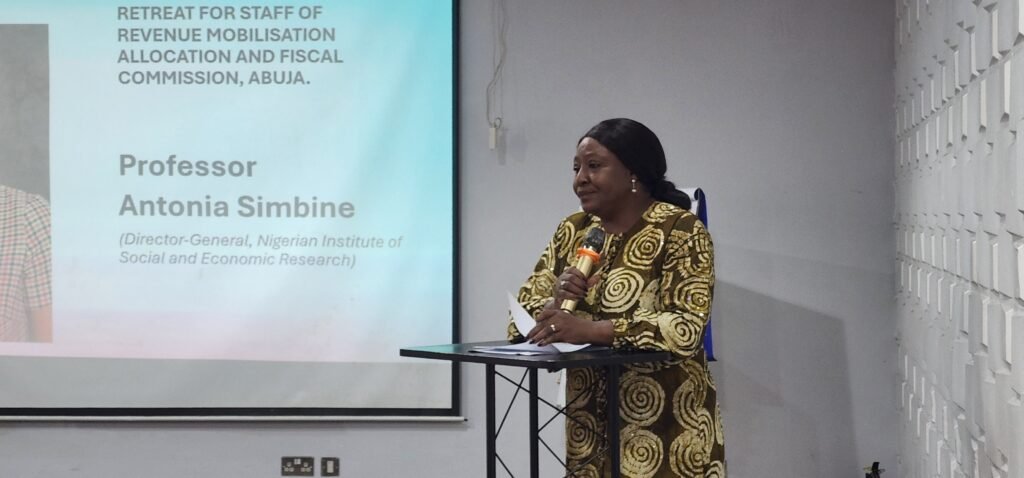
Opening Session
Proceedings commenced on Monday, 8th June with a formal opening session. Delivering the opening remarks, the Director General of NISER, Professor A.T. Simbine, welcomed participants and situated the retreat within NISER’s broader mission of generating and applying social and economic research to support evidence-based governance in Nigeria. She underscored the Institute’s commitment to partnering with constitutional bodies such as RMAFC to build the analytical foundations for sound fiscal decision-making.
The Chairman of RMAFC, Dr. M.B. Shehu, OFR, delivered a goodwill message in which he affirmed the Commission’s dedication to its constitutional mandate and expressed confidence that the retreat would equip staff with renewed vigour and sharper tools to discharge their responsibilities. Represented by the RMAFC Head of Committee, he noted that the quality of RMAFC’s outputs — from remuneration reviews to allocation formula recommendations — depends fundamentally on the quality of knowledge and analytical capacity that its staff bring to their work.
Day 1: Legal Foundations and Remuneration Frameworks
The first technical session, which ran through the afternoon of Day 1, opened with a presentation on the Legal and Regulatory Framework for Revenue Mobilisation and Remuneration Management, delivered by Professor A. Oladeji. The presentation examined the constitutional and statutory architecture within which RMAFC operates, tracing the legal basis for the Commission’s mandate and interrogating how well existing legislation responds to contemporary fiscal realities. Participants engaged in robust floor discussions that surfaced questions around the adequacy of current legal provisions, inter-agency accountability mechanisms, and the scope of the Commission’s enforcement powers.
The afternoon session featured a presentation by Louis Chete on Aligning Remuneration Decisions with Constitutional Mandates and Economic Indicators. This module explored the methodological and institutional dimensions of remuneration review — how decisions about the salaries and allowances of political office holders can be grounded in verifiable economic data rather than political negotiation. The discussions that followed were animated, with participants drawing on their operational experience to probe the gap between the Commission’s advisory role and the political pressures that often shape remuneration outcomes in practice.
Day 2: Citizen Engagement, Monetisation, and Intergovernmental Collaboration
The second day widened the lens considerably, addressing the public and institutional dimensions of fiscal governance. Professor E. Remi Aiyede opened the session with a presentation on Citizen Engagement and Public Trust in Fiscal Governance. He argued that the legitimacy of fiscal institutions — and of RMAFC specifically — depends not only on technical correctness but on the degree to which citizens understand, trust, and can hold those institutions accountable. The presentation prompted rich discussion on how RMAFC can communicate its mandate more effectively to the Nigerian public and engage civil society in the oversight of revenue allocation.
Professor G. Akpokodje followed with a presentation on Monetisation Policy and Trends in Recurrent Expenditure, examining how the structure of Nigeria’s public expenditure — particularly the weight of recurrent spending on personnel costs — intersects with the Commission’s work on remuneration. The module situated RMAFC’s advisory role within the broader challenge of achieving fiscal sustainability across all tiers of government.
The day concluded with a presentation by Professor O.B. Okuwa on Interagency and Intergovernmental Collaboration and Evidence-based Wage Structure in Nigeria. This module addressed one of the more operationally significant challenges facing the Commission: how to build effective working relationships with other revenue and fiscal institutions — including the Federal Inland Revenue Service, the Nigeria Customs Service, the Office of the Accountant-General, and state-level internal revenue services — in a way that produces coherent, evidence-based remuneration and allocation decisions. A group exercise facilitated by Professor Akpokodje allowed participants to work through collaborative scenarios drawn from real institutional challenges.

Day 3: Strategic Planning and the Role of Artificial Intelligence
Wednesday’s session brought two of the retreat’s most forward-looking modules together in a compelling pairing. Dr. Steve Ogidan, mni, opened with a presentation on Crafting a Strategic Plan for RMAFC, 2026–2030. The module guided participants through the principles and processes of institutional strategic planning, with specific attention to how RMAFC can chart a clear course for the next five years — defining priorities, mobilising internal capacity, and building the external partnerships necessary to fulfil its mandate in a rapidly changing fiscal environment.
This was followed by what many participants described as among the most thought-provoking sessions of the retreat: a presentation by Dr. A.Y. Daramola on AI-Driven Fiscal Revolutions — Leveraging Technologies for Transforming Revenue Mobilisation in Nigeria. The module introduced participants to the growing application of Artificial Intelligence and digital technologies in public finance globally and across Africa, drawing on examples from the Kenya Revenue Authority’s AI-enabled tax compliance systems and the Federal Inland Revenue Service’s ongoing digital transformation. Dr. Daramola examined how AI tools — including machine learning, predictive analytics, and automated anomaly detection — can transform revenue monitoring from a reactive, report-dependent process into a continuous, data-driven oversight function. The session prompted extensive discussion on the practical steps RMAFC can take to integrate technology into its monitoring and allocation functions, as well as the institutional and regulatory preconditions for doing so effectively.
The day concluded with a presentation by Professor Oladeji on Revisiting the Vertical Revenue Allocation Formula in Nigeria, a subject of enduring national significance. The module examined the principles and parameters underpinning the current revenue sharing formula and explored the analytical basis for potential revisions — a timely discussion given the Federal Government’s ongoing directive to RMAFC to review the formula. Group presentations allowed participants to synthesise insights from across the day’s sessions and present their own analytical perspectives.
Day 4: Reform, Sustainability, and Assessment
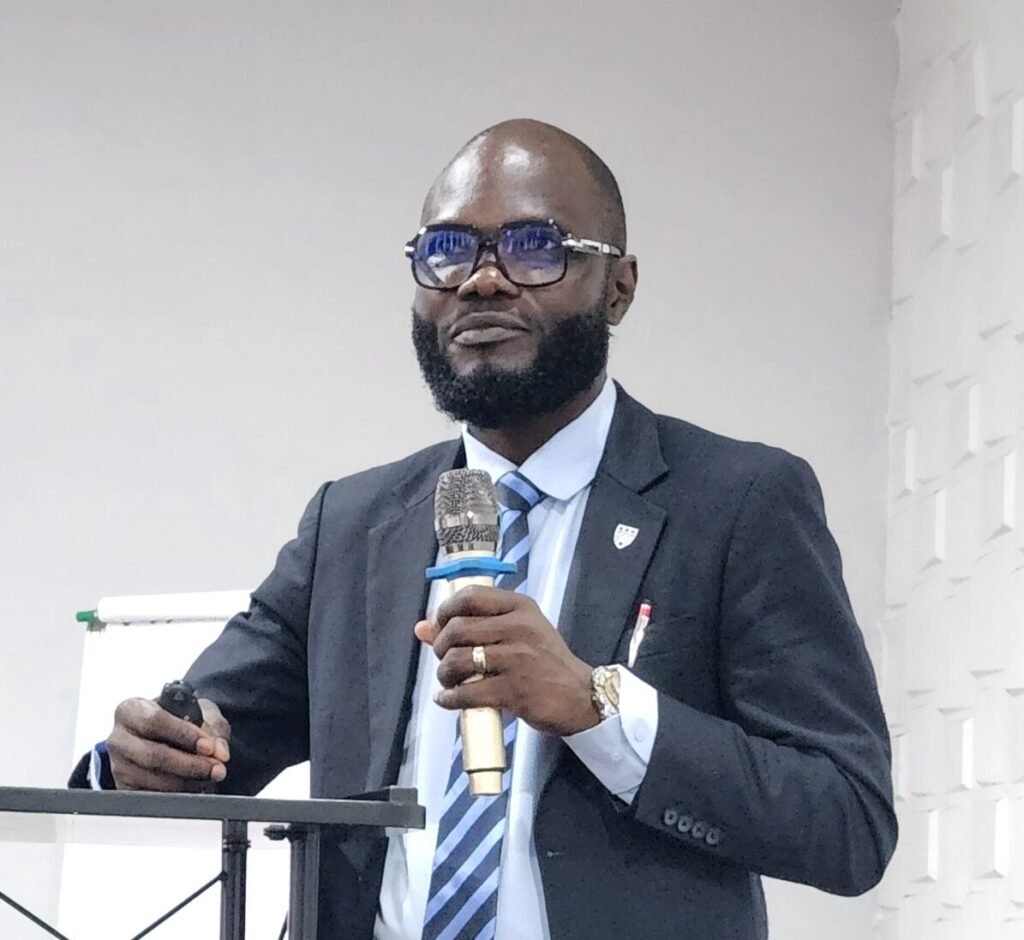
The final technical day addressed the political economy and reform dimensions of the Commission’s work. Professor Ekundayo Mesagan (Pan-Atlantic University) opened with a presentation on Reforming Revenue Mobilisation and Remuneration Management in Nigeria, situating RMAFC’s functions within the broader reform agenda that has accelerated in Nigeria following the landmark Tax Reform Acts of 2025. He examined how the Commission can position itself as a proactive reform actor rather than a passive institutional participant, and what structural changes to revenue administration would most directly support RMAFC’s oversight capacity.
Professors Akpokodje and Okuwa jointly facilitated the concluding module on Fiscal Sustainability and the Political Economy of Public Remuneration in Nigeria — a fitting capstone for the retreat. The module engaged directly with the tension between technically sound remuneration recommendations and the political dynamics that shape their reception and implementation. Participants examined case studies from Nigeria’s fiscal history, probed the conditions under which evidence-based advice gains traction in political decision-making, and reflected on RMAFC’s positioning as an institution that must navigate both domains with integrity and credibility.
The day concluded with group presentations from participants, which portrayed the participants’ retention and application of the retreat’s core concepts. The closing was presided over by the Chairman of RMAFC, whose remarks celebrated the quality of engagement throughout the week and reinforced the Commission’s commitment to translating the retreat’s insights into institutional action.
A Retreat Built for the Moment
The timing and content of this retreat reflected a clear-eyed appreciation of the moment Nigeria’s fiscal governance institutions now occupy. With sweeping tax reforms enacted, a revenue allocation formula under active review, digital transformation accelerating across revenue agencies, and public expectations of transparency at an all-time high, RMAFC faces both significant pressure and significant opportunity. The capacity building programme designed by NISER for this retreat addressed each of these dimensions — legal, economic, technological, strategic, and political — with rigour and practical relevance.
NISER’s role as the intellectual anchor of the retreat is consistent with the Institute’s founding mandate: to serve as Nigeria’s foremost applied social science research institution, bridging the gap between rigorous analysis and effective governance. The partnership with RMAFC reflects a shared understanding that institutional reform in Nigeria’s public sector requires not only political will but sustained investment in the knowledge and analytical capacity of the people who carry out the work of governance every day.
The retreat stood as a testament to what purposeful, well-designed capacity building can achieve, and as a foundation on which RMAFC can build as it pursues a more effective, data-driven, and transparent fulfilment of its constitutional mandate in the years ahead.