2027 Election in focus: NISER DG leads high-level panel on insecurities and democratic reforms at the 35th NPSA conference, Ibadan.
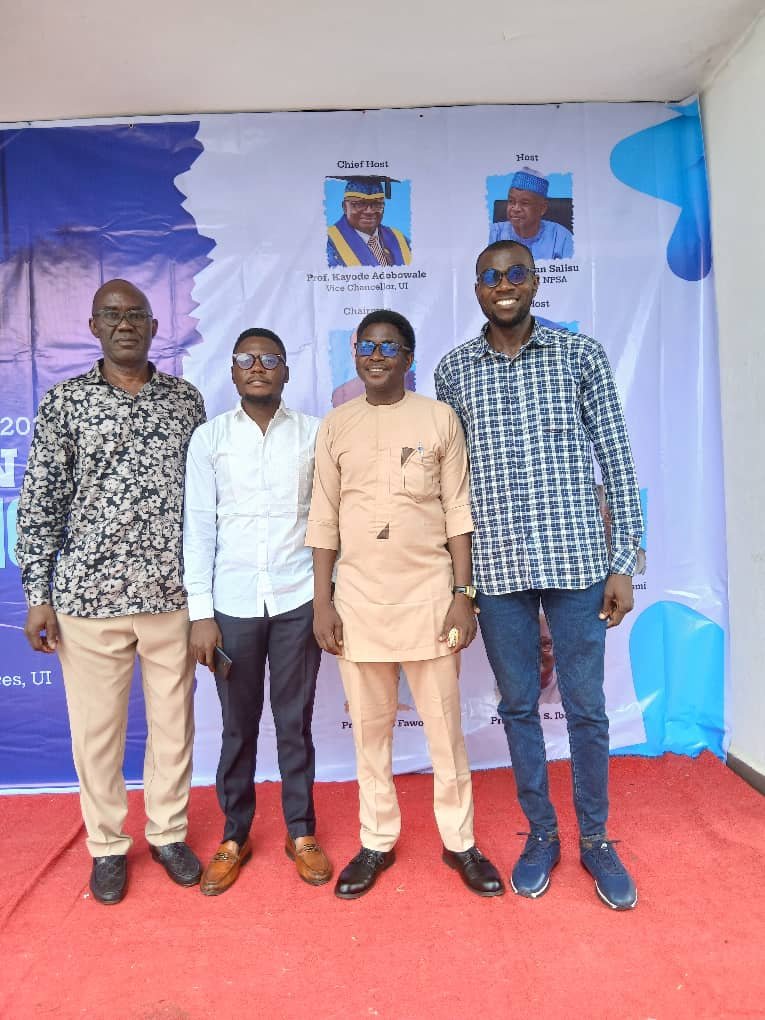
The 35th Annual National Conference of the Nigerian Political Science Association (NPSA), themed “26 Years of Democracy in Nigeria, 1999–2025,” held from 9–11 June 2026 at the Department of Political Science, University of Ibadan, brought together scholars, policymakers, politicians, policy makers, researchers, and post graduate students to reflect on Nigeria’s democratic journey and address the challenges confronting democratic governance.
The conference was formally declared open by the Vice-Chancellor of the University of Ibadan, Prof. Kayode O. Adebowale, who described the gathering as an opportunity for scholars to fulfil their sacred responsibility of engaging in critical thinking and providing solutions to national issues. He observed that despite over two decades of uninterrupted democratic rule, questions remain as to whether the country has made substantial progress or merely moved in circles.
According to the Vice-Chancellor, there remains a disconnect between democratic ideals and their practical application, particularly with respect to electoral integrity. He stressed that democracy goes beyond participation in elections and requires accountability, integrity and strong institutions. He identified key areas requiring urgent attention, including political succession crises, the quality of governance and democratic dividends, insecurity, and the growing loss of public confidence in the judiciary.
Prof. Adebowale called for deliberate efforts towards producing quality policy briefs, preserving Nigeria’s federal structure, mentoring the next generation of leaders and scholars, and strengthening internal party democracy devoid of godfatherism. He emphasized that democracy cannot be imposed but must be nurtured through continuous learning and practice.
The Distinguished Special Guest of Honour, His Excellency, Engr. Seyi Makinde, Governor of Oyo State, represented by the Secretary to the State Government, Prof. Musibau Adetunji Babtunde, highlighted the nation’s prevailing challenges, including economic difficulties, insecurity, the need to strengthen the rule of law and the imperative of ensuring peaceful and credible elections. He urged all stakeholders to work collectively towards overcoming these challenges in order to guarantee the dividends of democracy for all citizens.
Earlier, Delivering the State of the Nation Address, the outgoing President of the Nigerian Political Science Association, Prof. Hassan Saliu, focused on the challenges facing Nigeria’s electoral process, particularly vote-buying, corruption and issues of accountability. He commended members of his executive council and expressed appreciation to distinguished scholars, Fellows and members of the Association whose support contributed significantly to the growth and success of the NPSA.
The opening ceremony was presided over by the Chairman of the Federal Civil Service Commission, Prof. Tunji Olaopa, who encouraged political scientists to ensure the discipline remains relevant to present-day realities and to offer intellectual leadership in tackling Nigeria’s governance challenges.
In her goodwill message, the Director-General of the Nigerian Institute of Social and Economic Research (NISER), Prof. Antonia Taiye Simbine, congratulated the outgoing executive members for their stewardship and also felicitated the newly elected officers. She described the 35th Annual Conference as one of the most successful gatherings in the history of the Association and commended the Local Organising Committee for its outstanding efforts.
Prof. Simbine further acknowledged the immense contributions of senior academics and distinguished political scientists to the growth of the Association and national development, while encouraging members to continue to uphold excellence and assume leadership roles within the profession.
One of the major highlights of the conference was a panel session chaired by Prof. Antonia Taiye Simbine on insecurity, electoral practices and the prospects for the 2027 general elections. The panel featured distinguished scholars who examined emerging issues and offered insights into the challenges confronting Nigeria’s democratic process.
Speaking during the session, Prof. Audu Jacobs of Ahmadu Bello University, Zaria, identified gaps within the electoral framework, inadequate funding and concerns over the integrity of the judiciary as major threats to the conduct of credible elections. He noted that although the judiciary had traditionally been regarded as the last hope of the common man, public confidence in the institution had declined considerably, underscoring the need for reforms anchored on integrity and accountability.
Similarly, Prof. Ayodeji of Tai Solarin University of Education examined voter behaviour and the role of opposition parties in democratic consolidation. He expressed concern over recurring irregularities in electoral contests and argued that many political parties have become more interested in winning elections than promoting ideology and offering viable alternatives necessary for democratic development.
Also contributing to the discussion, Prof. Remi of the University of Ibadan highlighted the role of technology in enhancing electoral transparency. While acknowledging its significance, he maintained that technology alone cannot guarantee electoral integrity. He stressed the need for stronger institutions, greater independence for the Independent National Electoral Commission (INEC), neutrality in decision-making, resistance to undue interference and sustained capacity building for electoral personnel.
The conference provided a robust platform for intellectual engagement and critical reflections on the state of Nigeria’s democracy. Participants unanimously emphasized the need for institutional reforms, accountability and strengthened democratic values as essential prerequisites for deepening democracy and promoting sustainable national development.
Keynote presentations were delivered by Prof. Haruna Dlakwa and Prof. S. S. Ibaba, while the lead paper was presented by Prof. Alade Fawole. The discussions focused on democratic consolidation, governance deficits, electoral reforms, accountability, and national development.
The conference also featured the conferment of Fellowship and Honorary Membership awards on distinguished scholars and eminent personalities, including Prof. Haruna Dlakwa, Prof. Jobrin Ibrahim, Prof. Sam Egwu, Prof. Rufai Alkali, among others.
Proceedings further continued with the presentation of over 200 papers spanning diverse thematic areas such as democracy and governance, elections and electoral reforms, insecurity and national development, public accountability, and institutional reforms.