
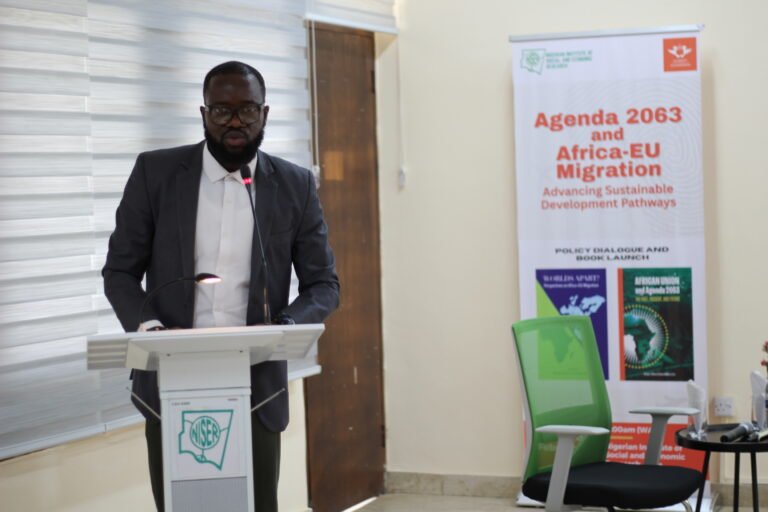
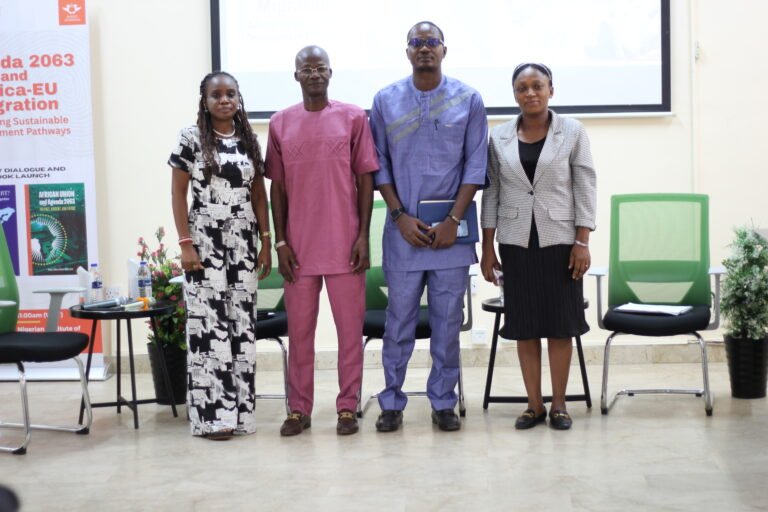


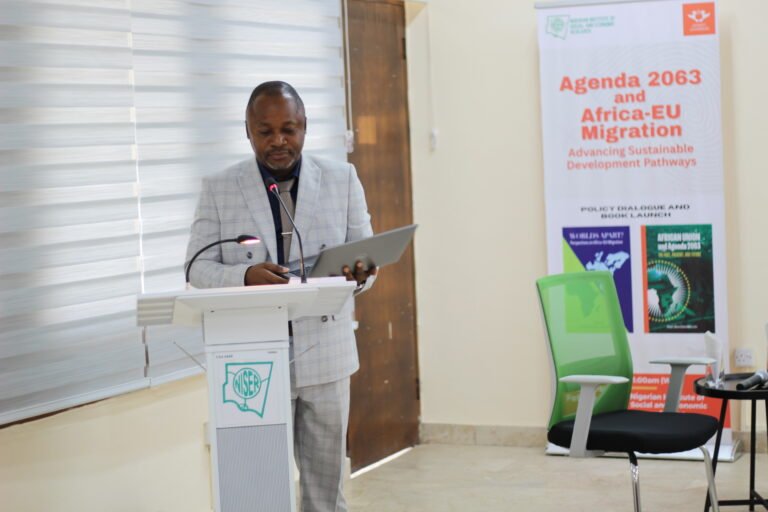

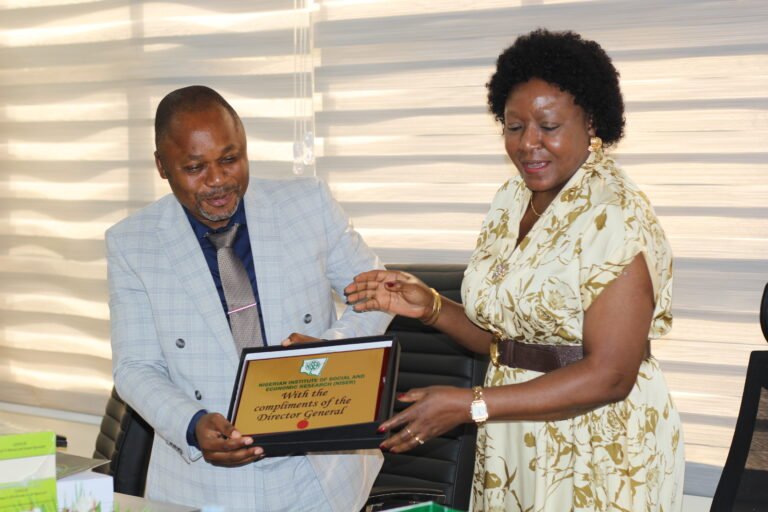
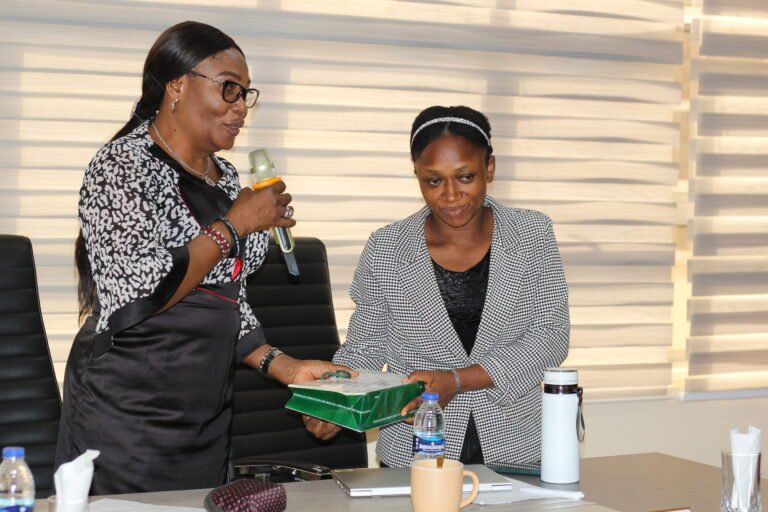
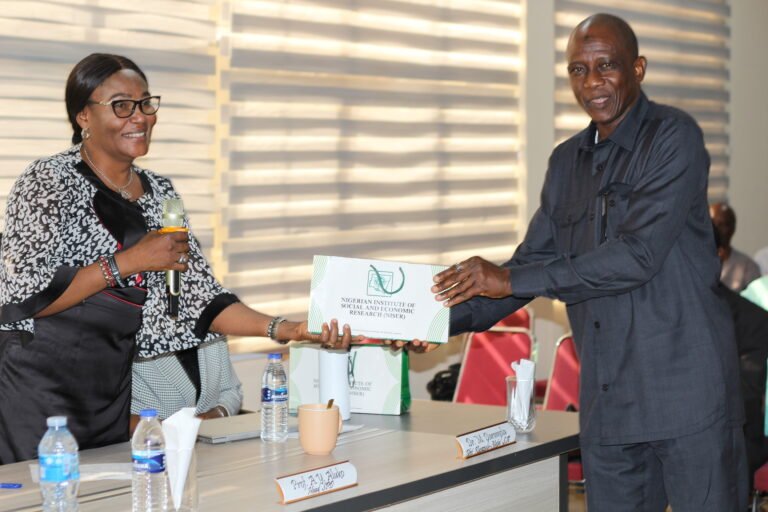
The Nigerian Institute of Social and Economic Research (NISER) recently hosted a rich and wide-ranging programme marking the public launch of two major publications — Worlds Apart? Perspectives on Africa-EU Migration, and African Union and Agenda 2063: Past, Present and Future, both edited by Professor Adeoye Akinola (University of Johannesburg, South
Africa). The event brought together scholars and researchers for a full day of presentations, panel discussions, and floor debates that were as candid as they were intellectually substantive.
Setting the Tone: The DG’s Opening Remarks
The programme was opened by the NISER Director General, Prof. A.T. Simbine, who framed the day’s discussions with characteristic clarity. Noting that governance progress has stalled across much of the continent — with security, rule of law, and democratic participation declining in several countries according to both the Mo Ibrahim Foundation’s 2023 Index and the World Bank’s 2024 governance indicators — the NISER DG argued that Agenda 2063 remains visionary precisely because implementation gaps remain so significant.
On the migration volume, she challenged dominant narratives, pointing out that contrary to political rhetoric suggesting a mass African exodus to Europe, most Africans who enter Europe do so through regular pathways — study visas, family reunification, and work permits. She also underscored the scale of Africa’s employment challenge: sub-Saharan Africa needs to create between 18 and 20 million jobs annually simply to absorb new labour market entrants. “Once Africa is transformed,” she remarked, “Nigeria will also, and other countries within the continent will benefit.”
First Presentation: Worlds Apart? — The Migration Question
Prof. Akinola opened the academic proceedings with a presentation on the book, Worlds Apart? Perspectives on Africa-EU Migration, grounding the discussion in sobering data. By the end of 2024, the world hosted 43.7 million refugees and approximately 123 million displaced persons — meaning roughly one in every 67 people is either displaced or a refugee. Between 2014 and 2025, more than 33,000 migrants died or went missing in the Mediterranean Sea alone, not counting those who perished crossing the Sahara or were enslaved along the way.
Prof. Akinola argued that migration has become a defining axis of Africa-Europe relations, assuming political and diplomatic dimensions that cut across development cooperation, counter-terrorism, climate governance, and demographic policy. The book, he explained, was born out of a research project initially funded by the German Foreign Office — with the frank admission that the funding was intended to develop policies to discourage African migration to Europe. The research team, however, used the opportunity to reframe the conversation: rather than treating migration as a security threat to be exterminated, they pushed to understand it as a developmental phenomenon.
Among the book’s key arguments: African migration is primarily driven by structural unemployment, not a desire to abandon the continent; most intra-continental movement stays within Africa; the 2015 “migration crisis” was driven largely by Syrian, not African, displacement; and every conversation about migration governance must include the voices of migrants themselves — not just the policymakers who categorise them.
Panel Session One: Push Factors, Pull Factors, and the Power of Remittances
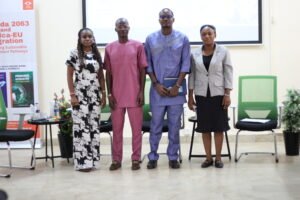
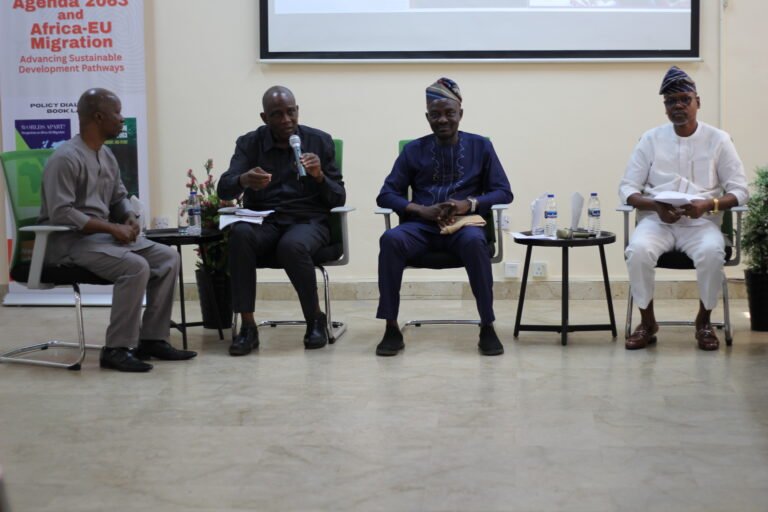
The first panel, moderated by Dr Adebukola Daramola and featuring Dr U.A. Ojedokun, Prof. Omololu Fagbadebo, and Dr Modupe Daramola, probed the structural causes of irregular migration and the economic potential of diaspora remittances. Panellists identified poverty, insecurity, low wages, and governance failure as the dominant push factors, while better quality of life and economic opportunity remain the principal pull factors drawing Africans abroad.
The panel also confronted the uncomfortable asymmetry at the heart of Africa-Europe migration negotiations. Europe, it was noted, consistently seeks to securitise migration — treating it as an endemic threat to be eliminated — while African interests lie in harnessing its developmental potential, particularly through remittances. A diaspora study cited during the session found that migrants send an average of $2,000 USD monthly to families back home, prioritising rent, healthcare, and education. In some periods, African remittances have surpassed official development assistance.
Floor Discussions: The View from the Ground
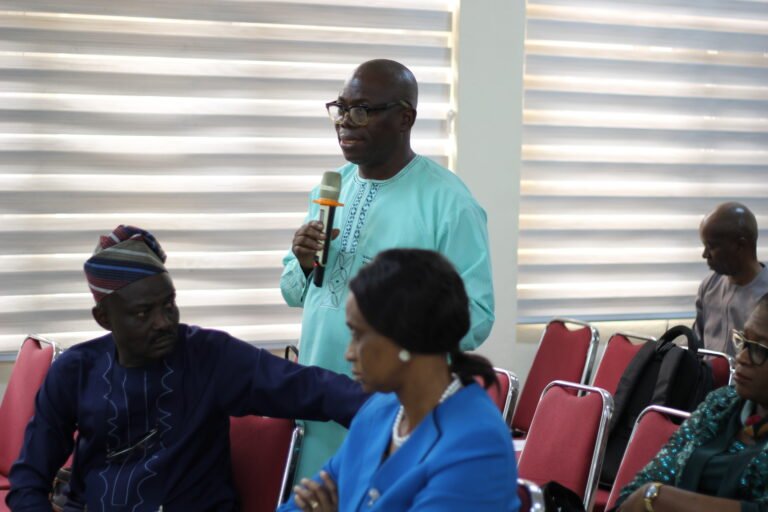
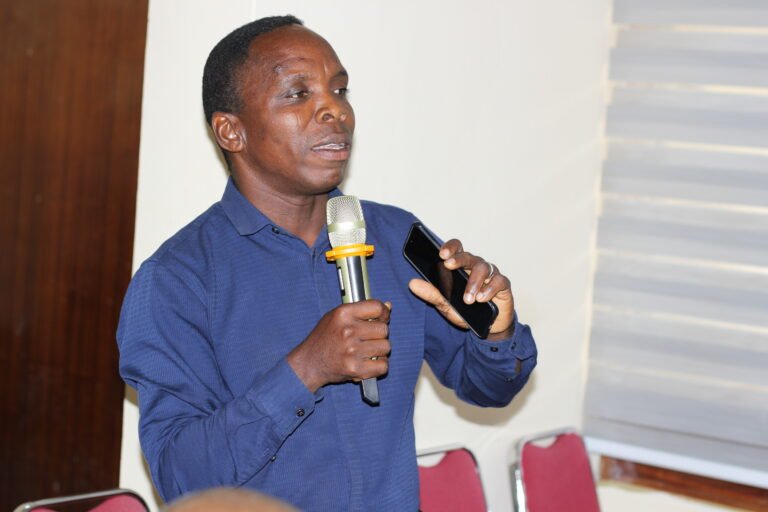
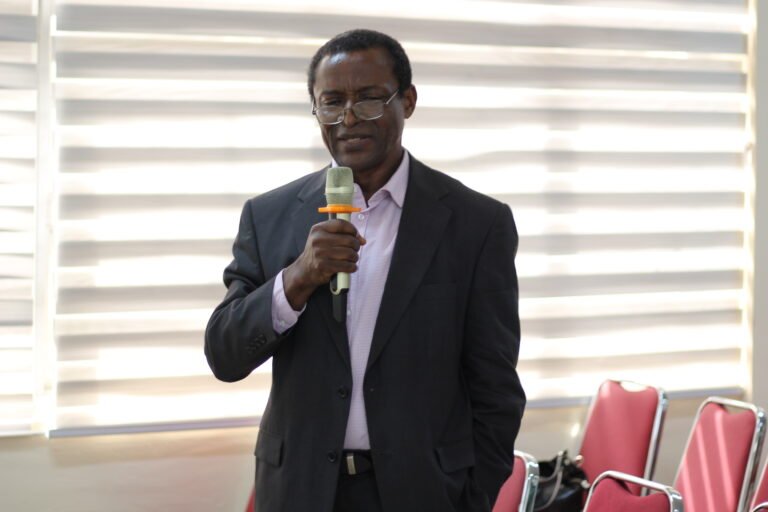
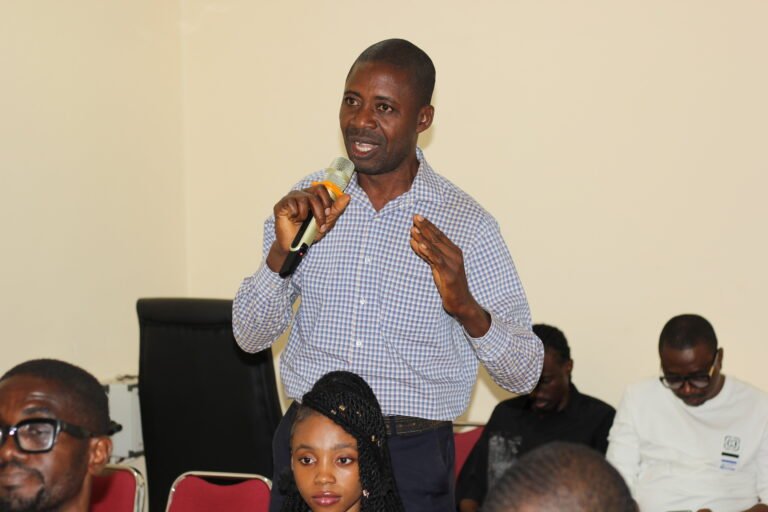
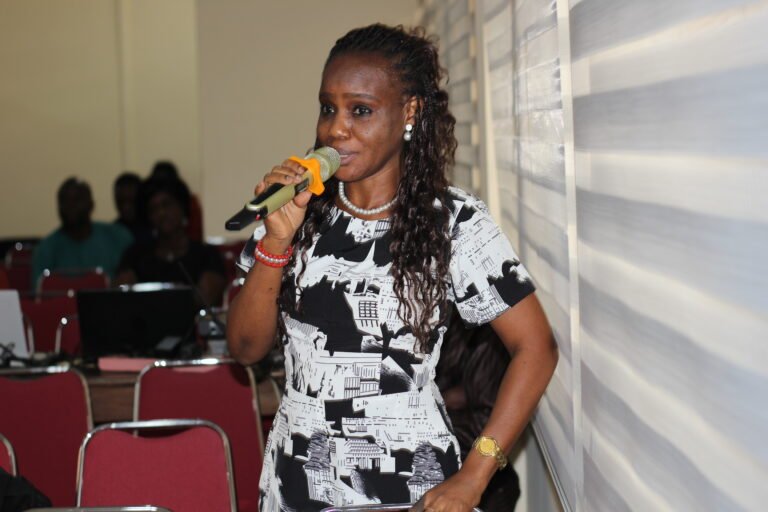
The floor discussions that followed were among the most animated of the day. One contributor, Prof Gbenga Sunmola, offered a memorable analogy: “Africa is an oven, the EU is a cool silo. You cannot keep people in an oven — no jobs, conflict, kidnapping, potential unrealised.” The bridge between the two, he argued, is fragile, and people fall crossing it. The solution, several contributors agreed, is not to police the bridge but to cool the oven.
Others challenged the historical framing of African migration entirely. European colonists arrived in Africa without visas and without restriction; the idea that African movement to Europe now constitutes a crisis, contributors argued, deserves far more historical interrogation than it typically receives. The floor also raised the urgency of widening legal migration pathways — with one contributor noting that if legal routes were more accessible, fewer people would risk their lives on irregular ones.
Second Presentation: African Union and Agenda 2063
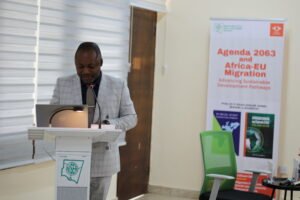
Prof. Akinola’s second presentation introduced African Union and Agenda 2063, a 30-chapter volume drawing on contributions from 36 authors — deliberately chosen to include only Africa-based scholars, policy practitioners, retired diplomats, civil society actors, and African Union officials, in order to preserve local context and authenticity.
The book critiques Agenda 2063 not to dismiss it, but to take it seriously. Prof. Akinola acknowledged that the African Union’s flagship continental blueprint is both visionary and, in places, overambitious — noting that the AU continues to rely almost entirely on external funding, including for staff salaries, while its headquarters building in Addis Ababa was built by China and expanded by the United States and Germany. “How do you negotiate with the German government on migration,” he asked pointedly, “when you are sitting in a German-funded house?”
Despite these structural constraints, the book argues for cautious optimism. Africa’s strength, Prof. Akinola suggested, lies not just in its institutions but in the 1.4 billion people those institutions are meant to serve — and in the growing convergence of academic, policy, and civil society voices committed to the continent’s transformation.
Panel Session Two: Can Africa Own Agenda 2063?
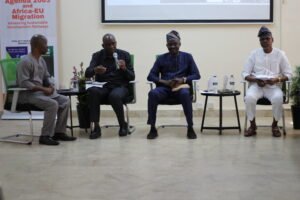
The second panel — featuring Prof. Abubakar Oladeji, Prof. Dhikru Yagboyaju, and Dr Hakeem Tijani, and moderated by Prof. Akpokodje — tackled the difficult question of whether Africa can genuinely take ownership of its own continental agenda.
Panellists were honest about the obstacles. Most African national budgets are not aligned with Agenda 2063. The AfCFTA, one of the agenda’s flagship programmes, was built on assumptions of a perfectly competitive market that do not reflect African economic realities. Intra-African trade remains critically low, with the continent’s three largest economies — Nigeria, Egypt, and South Africa — accounting for roughly 51% of continental GDP. The heterogeneity of African economies makes a one-size-fits-all trade framework deeply challenging.
Yet the panel also identified pathways forward: investment in digitalisation and technology as enablers of job creation; stronger incentive structures for governments to domesticate continental agendas; and the urgent need for African researchers and institutions to understand African markets on their own terms, rather than through externally generated data and frameworks.
A Day of Honest, Necessary Conversation
What distinguished this programme was its refusal to retreat into comfortable abstractions. Speakers and floor contributors alike were willing to name the contradictions — between ambition and capacity, between continental solidarity and national sovereignty, between the migration experienced and the migration narrated.
Both publications launched on the day align with NISER’s commitment to supporting policy-relevant knowledge that is rooted in African realities, legible to African audiences, and actionable for African institutions.