
The “Moral Numbing” Effect: Why the First Act of Corruption Matters Most
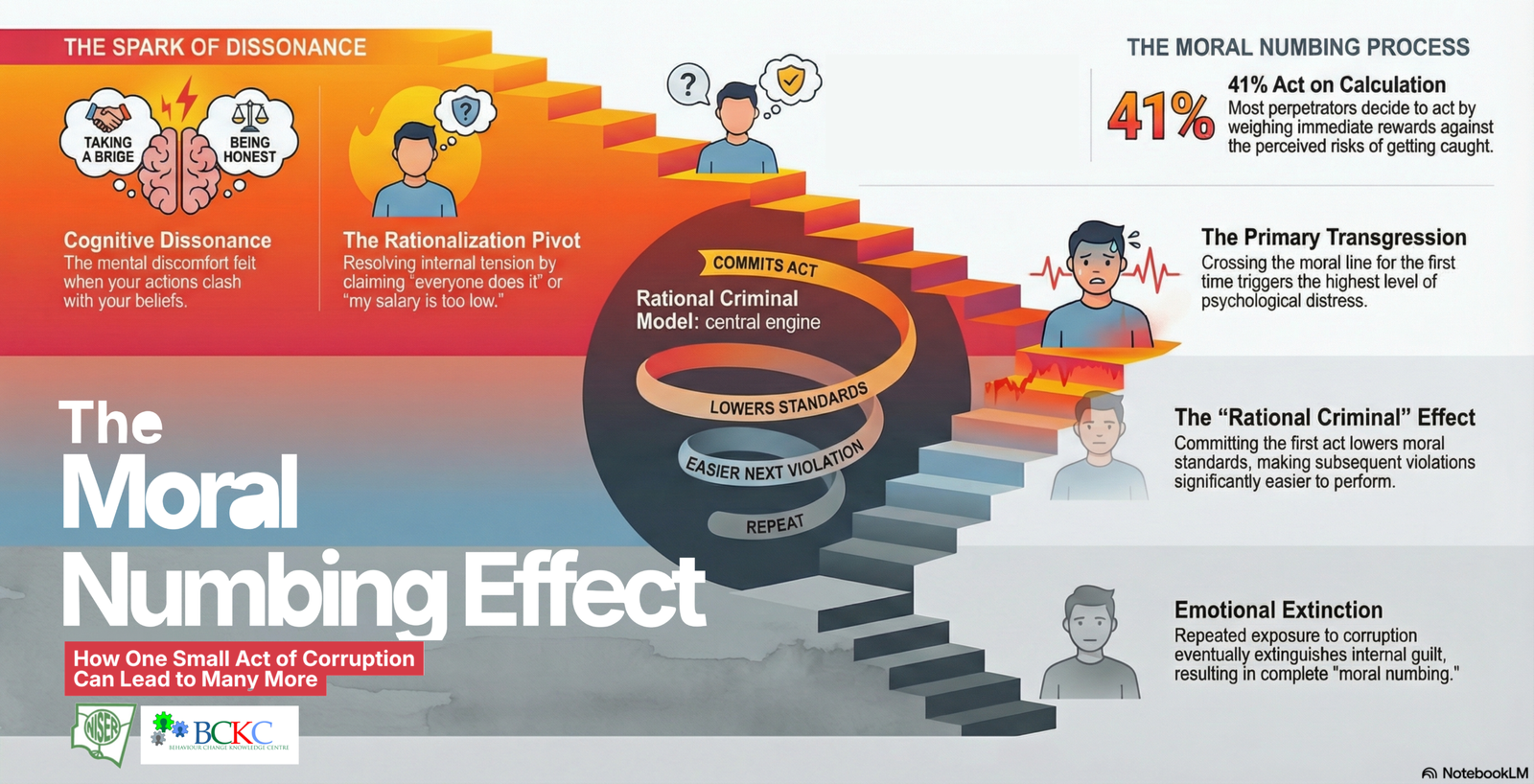
Corruption is often described as an “iceberg phenomenon,” where visible scandals represent only a small fraction of a much deeper and less visible problem. Beneath the surface lie complex psychological processes that sustain and normalize unethical behaviour. One of the most critical among these is the “moral numbing” effect—a gradual desensitization that can transform a single act of misconduct into a pattern of repeated corruption.
The Initial Ethical Breach
Corruption rarely begins with large-scale offences. In many cases, it starts with seemingly minor infractions—such as accepting informal payments to expedite services or bending established procedures for personal gain.
At this early stage, individuals typically experience discomfort, guilt, and internal conflict. This reaction arises because the behaviour contradicts their self-perception as honest and law-abiding. However, once this initial ethical boundary is crossed, an important psychological shift occurs: the barrier to future misconduct is significantly weakened.
From Discomfort to Desensitization
Following the first act, the intensity of moral discomfort tends to diminish. What was initially perceived as wrong gradually becomes easier to justify and repeat. Over time, the emotional response—particularly feelings of guilt—reduces substantially and may eventually disappear altogether.
This process is closely linked to cognitive dissonance, which refers to the mental tension experienced when actions conflict with personal values. To resolve this tension, individuals often adjust their beliefs to align with their behaviour, thereby restoring a sense of internal consistency. As a result, corrupt practices may become normalized and integrated into routine decision-making.
Mechanisms of Rationalization
To reconcile their actions with their self-image, individuals frequently adopt rationalization strategies that make corruption appear acceptable or necessary. Common examples include:
- The Majority Fallacy: The belief that “everyone is doing it,” thereby minimizing personal responsibility.
- Survival/Functional justification: The perception that corruption is a necessary response to economic hardship or systemic inequities.
- Moral offsetting: The assumption that using illicit gains for socially or morally acceptable purposes (such as supporting family members or charitable activities) legitimizes the behaviour.
While these justifications may reduce immediate psychological discomfort, they contribute to the gradual erosion of ethical standards.
The Role of Social Environment
The moral numbing effect is further reinforced by the broader social and institutional environment. Behaviour is strongly influenced by observation and imitation. When individuals witness others benefiting from corrupt practices—particularly in the absence of accountability—it signals that such behaviour is both acceptable and rewarding.
Over time, these patterns can become embedded within organizational or societal norms. In some contexts, individuals who resist engaging in corrupt practices may face social pressure, exclusion, or professional disadvantage. This dynamic fosters a self-reinforcing cycle in which corruption is normalized, and integrity is undervalued.
Pathways to Reform
Addressing the moral numbing effect requires more than legislative measures; it necessitates deliberate efforts to reshape attitudes, incentives, and social norms. Key strategies include:
- Strengthening accountability systems: Ensuring that corrupt actions are met with clear, consistent, and proportionate consequences.
- Promoting integrity-based role models: Highlighting individuals and institutions that demonstrate ethical leadership and transparency.
- Leveraging strategic communication: Utilizing media, storytelling, and digital platforms to reinforce positive behavioural norms and redefine societal expectations.
- Encouraging collective behavioural shifts: Evidence suggests that even moderate improvements in public commitment to ethical conduct can significantly reduce corruption over time.
Conclusion
The significance of the first act of corruption lies not in its scale, but in its psychological impact. By weakening moral resistance and reducing the emotional cost of unethical behaviour, it creates a pathway for repeated violations.
Understanding and addressing the moral numbing effect is therefore essential to any comprehensive anti-corruption strategy. Preventing that initial ethical compromise remains one of the most effective ways to safeguard integrity within institutions and society at large.
Further Reading
Ilevbare O., Famakinde O. (2022) Psychological Models of Corruption. Unpublished Working Paper. BCKC. Nigerian Institute of Social and Economic Research.